Kings and Conquerors: A Cheat Sheet to the Rulers of Egypt’s Greatest Temples
To fully comprehend the sheer scale of the monuments along the Nile, you have to look past the stone and meet the flesh-and-blood rulers who commissioned them. In ancient Egypt, the pharaoh was not just a political leader, they were the earthly bridge between humanity and the divine. A king’s primary duty was to project absolute strength, protect the borders, and build massive stone palaces for the gods to guarantee prosperity for the land. Every temple wall we walked past was essentially a multi-ton political billboard designed to immortalize a ruler’s victories, validate their crown, and secure their place in eternity.
Following our dive into the gods, the next logical step in establishing our historical context is meeting the builders themselves. From pioneering queens to warrior kings and foreign conquerors, here is our definitive cheat sheet to the legendary rulers who built, modified, and used the temples on our cruise itinerary.
1. Hatshepsut: The Female King (c. 1478 – 1458 BCE)

How She Came to Power: Initially reigning as queen regent for her young stepson, Thutmose III, Hatshepsut pulled off an unprecedented political maneuver. Backed by the powerful priesthood of Amun, she declared that the supreme god had personally chosen her to rule, officially crowning herself as a full male pharaoh and even wearing the traditional ceremonial false beard to cement her authority.
Who She Worshipped: She dedicated her entire reign to Amun-Ra, elevating his priesthood to ultimate wealth and power to validate her unorthodox crown.
Temples Built & Used: Her ultimate masterpiece is her multi-tiered Mortuary Temple at Djeser-Djeseru (Deir el-Bahari) on Luxor’s West Bank, cut directly into the limestone cliffs. She also erected massive, single-piece pink granite obelisks deep inside the heart of Karnak Temple.
How She Lost Power: She ruled peacefully and prosperously for over twenty years, dying of natural causes. Decades after her death, her stepson Thutmose III systematically defaced her monuments, smashed her statues, and hacked her name off temple walls, attempting to erase her rule from history to ensure a clean, unbroken male royal lineage for his own heirs. Her physical memory was buried so deeply beneath the sand that her name was lost for millennia, leaving her in a centuries-long historical slumber.
Her spectacular awakening began in the nineteenth century, when early archaeologists deciphered the Rosetta Stone and realized that the mysterious, defaced temple walls at Deir el-Bahari belonged to a female king. The true climax of her physical resurrection came in 1903, when legendary British archaeologist Howard Carter discovered an unassuming, minor tomb in the Valley of the Kings labeled KV60. On the hunt for grand pharaonic treasures, Carter completely ignored what lay inside. The tomb was small, crudely cut, and already ransacked by ancient thieves, so he noted it down, closed it back up, and walked away.
Inside that dark corridor rested two mummies. One was inside a proper coffin labeled as Sitre In, Hatshepsut’s beloved childhood wet nurse. The other was an anonymous, heavily built woman left unceremoniously on the bare stone floor, completely unlabelled. Another archaeologist moved the wet nurse to the Cairo Museum in 1906, but the unidentified woman on the floor was left behind in the dark for another eighty years. Even after dehydration from the mummification process, her body clearly retained the physical blueprint of a heavy build, showing deep, sagging folds of excess skin around her abdomen and thighs, alongside thick layers of remaining tissue that revealed her distinct silhouette.
The mystery was finally solved in 2007 through a brilliant bit of forensic science. Archaeologists analyzed a royal canopic box belonging to Hatshepsut that contained her mummified internal organs and a single, broken molar tooth. When scientists ran a high-resolution CT scan of the unknown female mummy left in KV60, they discovered she was missing a tooth, and the broken molar from the box fit her jaw socket with absolute, perfect precision. The obese woman left on the floor was indeed the great female king herself, hidden away in her nurse’s modest tomb by loyal priests to protect her from political defacement. Thousands of years after her stepson tried to murder her memory, Hatshepsut was officially identified, awakened from the dark, and restored to her rightful place as one of the greatest monarchs of the ancient world.
2. Amenhotep III: The Magnificent Builder (c. 1388 – 1351 BCE)

How He Came to Power: Inheriting an expansive, stable empire at its absolute economic peak, Amenhotep III ascended the throne peacefully as a young boy through the standard line of succession. Instead of fighting foreign wars, he used Egypt’s immense gold wealth to launch the most grand, artistic, and peaceful building boom in pharaonic history.
Who He Worshipped: He primarily championed Amun-Ra, but he also focused heavily on his own deification, actively worshipping his own living spirit as a manifestations of the sun disk.
Temples Built & Used: He built the grand, avenue-lined corridors and the stunning sun court of Luxor Temple, vastly expanded the monumental courtyards at Karnak, and built a sprawling mortuary complex on the West Bank where only his towering, weather-beaten Colossi of Memnon survive today.
How He Lost Power: He ruled for nearly forty years and died peacefully of illness in his late fifties, leaving behind a stable, fabulously wealthy kingdom that would soon be thrown into religious chaos by his radical son, Akhenaten.
3. Ramesses II: The Ultimate Propagandist (c. 1279 – 1213 BCE)

How He Came to Power: Trained for leadership from early childhood, Ramesses II served as a powerful prince regent alongside his warrior father, Seti I, before taking the throne alone. He went on to rule for a staggering 66 years, surviving long enough to outlive his first twelve sons and plastering his name over nearly every square inch of stone along the Nile.
Who He Worshipped: He worshipped the supreme triad of Amun-Ra, Ra-Horakhty, and Ptah, but his greatest theological effort went into worshipping himself, breaking canon by carving reliefs that showed him presenting offerings to his own deified image.
Temples Built & Used: He built the colossal rock-cut complex at Abu Simbel, added the massive entry gateways and giant seated colossi to the front of Luxor Temple, and completed the giant column forest of the Great Hypostyle Hall at Karnak.
The Legend of Kadesh: The defining event of his military career was the legendary Battle of Kadesh around 1274 BCE, where he marched 20,000 men north to challenge the Hittite Empire for control of a vital trading hub in modern-day Syria. Ambushed by hidden Hittite chariots due to false intelligence from double agents, Ramesses was completely cut off with only a single division. According to his official accounts inscribed across Egypt’s temple walls, the pharaoh personally turned the tide of annihilation by donning his golden armor, leaping onto his chariot, and spearheading a series of desperate counter-charges until reinforcements arrived. While plastered across his monuments as a sweeping personal triumph, the bloody battle was actually a strategic stalemate. This exhaustion led directly to another historical milestone in 1258 BCE: the Egyptian-Hittite Peace Treaty. It stands as the oldest surviving international peace accord in human history, establishing a permanent mutual-defense pact and a formal extradition agreement that put an end to generations of warfare.
How He Lost Power: He died of old age and severe arthritis around ninety years old, a legendary lifespan that made his subjects genuinely believe the world might end without him. His death marked the slow, gradual descent of the New Kingdom into economic stagnation.
4. Queen Nefertari: The Beloved Co-Ruler (c. 1279 – 1255 BCE)

How She Came to Power: Born into a noble Theban family with ties to previous royal lines, Nefertari married the teenage prince Ramesses II before he ever took the throne. When he ascended to the crown, she was elevated to Great Royal Wife. Rather than staying confined to the traditional shadows of the harem, she stepped directly into international diplomacy, actively writing state letters to foreign queens to help negotiate and secure the historic peace treaty with the Hittite Empire.
Who She Worshipped: She dedicated her spiritual life to Hathor, the goddess of love, joy, and beauty. Nefertari was viewed by the court not just as a mortal queen, but as the literal, earthly manifestation of Hathor bringing divine grace to Ramesses’ imperial court.
Temples Built & Used: Her ultimate monument is the spectacular Small Temple at Abu Simbel, carved directly into the mountain bedrock adjacent to the Great Temple. She also features prominently in towering reliefs across the front entry gateways of Luxor Temple and Karnak.
How She Lost Power: She died relatively young, around her mid-thirties, likely from illness or complications during childbirth. Ramesses was so utterly devastated by her loss that he built her the most breathtaking, intricately painted tomb in the entire Valley of the Queens, ensuring her image would remain pristine for eternity.
5. Ptolemy I Soter: The Greek Pharaoh (c. 305 – 282 BCE)

How He Came to Power: Following Alexander the Great’s sudden death in 323 BCE, his massive global empire fractured as his top generals fought for control. Ptolemy, Alexander’s most brilliant Macedonian general, claimed Egypt as his prize. Realizing he needed local loyalty to secure his borders, he officially crowned himself pharaoh, launching the three-century Greek Ptolemaic Dynasty.
Who He Worshipped: He funded the traditional Egyptian pantheon, focusing heavily on Isis and Osiris, while cleverly inventing a hybrid Greek-Egyptian god named Serapis to culturally unite his diverse subjects.
Temples Built & Used: He initiated the foundational layouts and funded the powerful priesthoods that allowed his descendants to construct the grand sandstone structures at Philae Temple, Edfu Temple, and Kom Ombo.
How He Lost Power: He ruled successfully for over two decades, securing Egypt’s status as a Mediterranean economic superpower. He abdicated the throne peacefully to his son, Ptolemy II, dying of old age shortly after.
6. Cleopatra VII: The Last Pharaoh (c. 51 – 30 BCE)
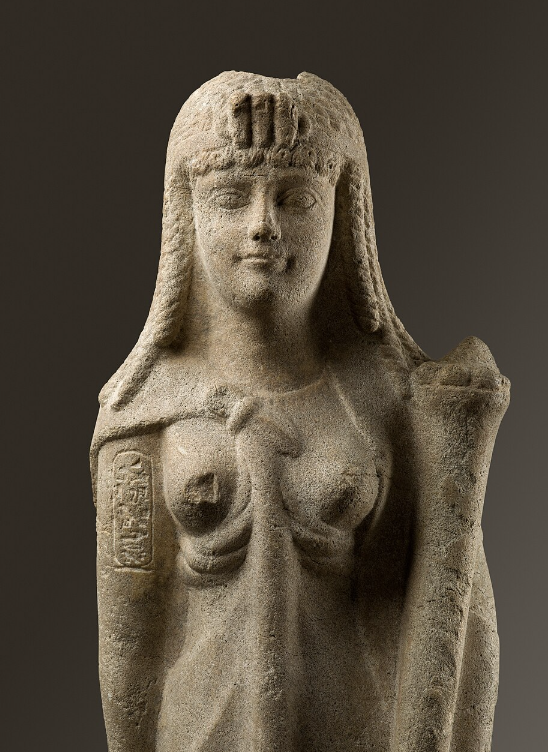
How She Came to Power: Emerging from a brutal, bloody family civil war against her younger brothers, Cleopatra used her immense political intellect, linguistic skills, and strategic romantic alliances with Roman heavyweights Julius Caesar and Mark Antony to secure her sole grip on the pharaonic throne.
Who She Worshipped: She dedicated herself entirely to Isis, regularly dressing in the goddess’s sacred linen robes and styling herself as the “New Isis” to project divine authority to her native Egyptian subjects.
Temples Built & Used: She poured massive wealth into finishing the construction and grand relief decorations at the riverside double-temple of Kom Ombo and the island sanctuary of Philae.
How She Lost Power: Following her devastating naval defeat against the future Roman Emperor Octavian at the Battle of Actium, and the subsequent invasion of Egypt, Cleopatra chose to commit suicide rather than be paraded through Rome as a captured prize. Her death brought a definitive end to the Ptolemaic Dynasty and three thousand years of independent pharaonic rule, turning Egypt into a personal province of the Roman Empire.
The Survival of the Ptolemaic Bloodline: Although Cleopatra VII’s death marked the end of independent pharaonic Egypt, her direct lineage did not vanish from history. Her three surviving children with Mark Antony were taken to Rome in golden chains, where Octavian spared their lives and placed them under the care of his sister, Octavia (Mark Antony’s widow). Her daughter, Cleopatra Selene, grew up to marry King Juba II, and together they were sent by Rome to rule Mauretania (now Morocco and Algeria) in North Africa. She built a glittering capital modeled directly after her mother’s lost city of Alexandria, and her own son, Ptolemy of Mauretania, eventually succeeded her on the throne, ensuring Cleopatra’s direct bloodline actively ruled a massive empire for a full century after her suicide.
Standing in the shadows of the monuments these men and women left behind is a humbling reminder of how heavily human ambition can shape the landscape of history. Whether driven by political desperation like Cleopatra, imperial ego like Ramesses, or the need for divine validation like Hatshepsut, these rulers successfully engineered a legacy that outlasted their empires by millennia. With the gods decoded and the pharaohs unmasked, the stage is officially set. Up next, we pull back the curtain on our first deep-dive location, stepping onto the motorboats of Aswan to explore the rescued island sanctuary of Philae Temple.

*A Note on Egyptian Geography
- Upper Egypt: Geographically located in the southern part of the country. Because the Nile River flows from south to north, ancient Egyptians designated the mountainous southern region upriver as Upper Egypt, while the flat northern delta region near the Mediterranean is Lower Egypt.