Visiting Peleș & Pelișor Castle: Fairytale History & Transylvanian Food
Once again we found ourselves up early and hitting the road, this time from our quaint little rental in beautiful, cobblestoned Brașov. Passing wide fields of grazing cattle, misty rolling hills, and colourful small towns waking up to the morning light, we eventually made our way up a steep, winding mountain road to the visitor parking lot for Peleş Castle. We had purchased our tickets ahead of time, choosing the earliest possible slot with an English guide, which as it turned out was timed perfectly right at opening.
Nestled dramatically at the foot of the Bucegi Mountains in the picturesque town of Sinaia, Peleș Castle is considered by many to be one of the most stunning palaces in Europe. It stands as a masterpiece of German Neo-Renaissance architecture, looking completely unreal and fairytale-like against its backdrop of dense, deep-green forests and rugged Carpathian peaks. This grand residence was the ultimate vision of King Carol I, who commissioned the build in 1873 to serve as a summer retreat for the Romanian royal family. It was designed not merely as a home, but as a bold, proud statement of progress, culture, and independence for a rapidly modernizing nation.

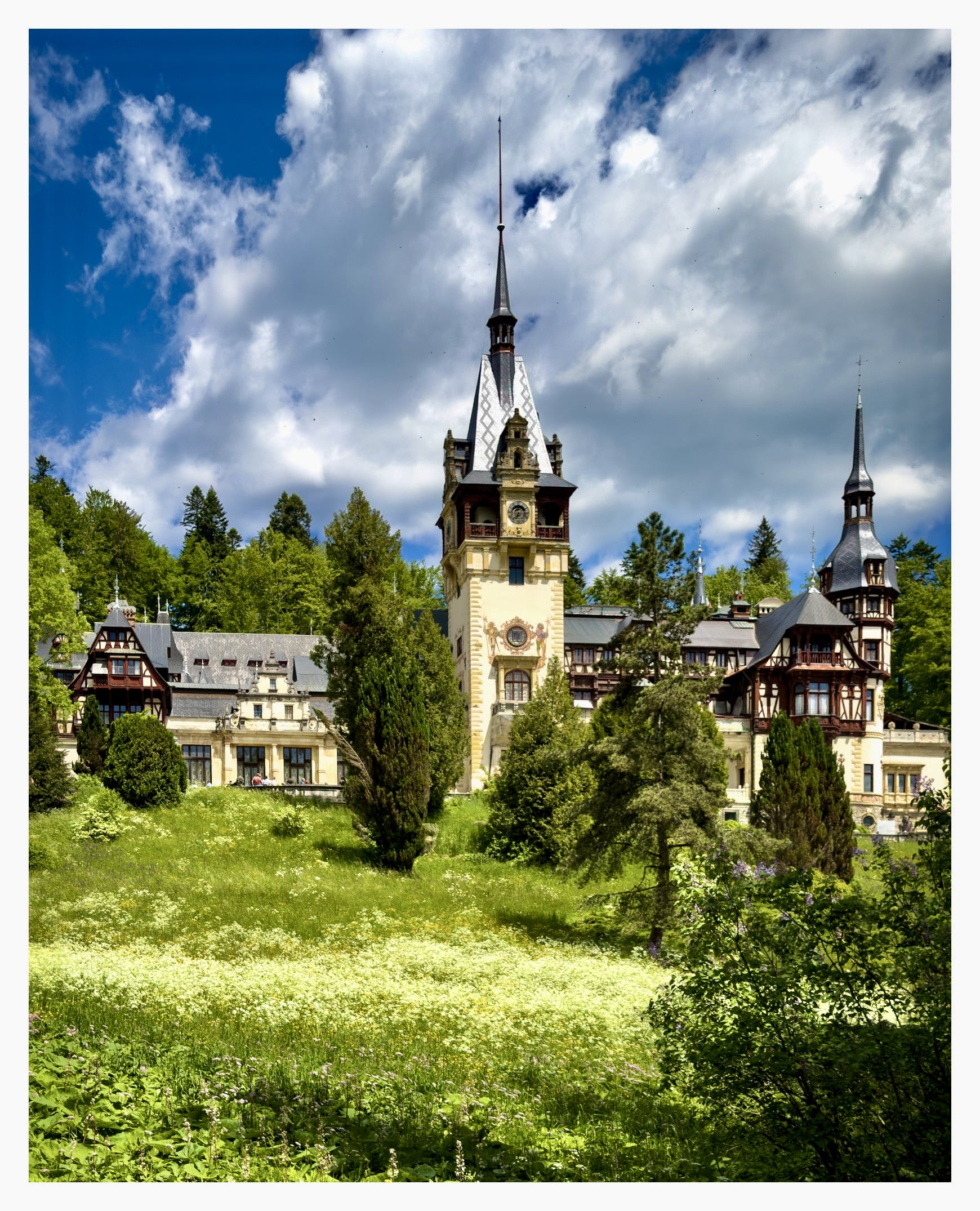

When we arrived, we quickly discovered that there is but one entrance and very little signage, certainly none to be found if you happen to be caught further back in the swelling crowd. I do highly recommend buying your tickets online in advance and arriving with much more time than you think you will need just to ensure you figure out the line situation. It is certainly worth every bit of the chaotic trouble to see what lies past the threshold.
The construction of the palace lasted from 1873 until its final completion in 1914, drawing together the finest woodcarvers, stone masons, architects, and artists from across Europe to work side by side. The result of their collective genius is an opulent layout of over 160 rooms, each decorated in an individual theme that seamlessly blends German Neo-Renaissance with Gothic, Baroque, Italian, Austrian, and Ottoman design elements.


Walking through the grand spaces, we learned that what truly set Peleș apart from traditional, drafty European fortresses was its incredible, forward-thinking innovation. From the very beginning, it was the first European castle to be fully equipped with electricity, powered entirely by its own dedicated plant on the grounds. It boasted central heating, hot and cold running water, telegraph and telephone lines, a small elevator for the royal family, and even an early central vacuum system. In the main foyer, the magnificent, intricately painted stained-glass roof was designed to open and close mechanically, gliding back to let the crisp mountain breeze fill the grand hall.
Every room we entered revealed an astounding, almost overwhelming attention to detail. The Royal Library, which holds over 30,000 leather-bound books, contains a secret, unidirectional door hidden behind a bookshelf that leads straight into the King’s private suite. In the intimate, 60-seat mini-theatre, the decor transports you directly into the lavish classicism of French Louis XIV style. The Music Room features intricately carved, dark teak furniture that was gifted to King Carol I by the Maharajah of Kapurthala in India, while the walls and ceilings of the nearby Turkish Salon are adorned with rich, heavy, handmade silk embroideries.


As an avid collector of weaponry, King Carol I amassed a breathtaking collection of over 4,500 items. The castle armoury displays more than 400 European and Oriental pieces dating from the 15th to the 19th centuries, including the absolute pièce de résistance: a magnificent, imposing set of matching knight and horse armour that weighs a massive 265 pounds.


When we reached the grand dining room, which features rustic 18th-century Breton furniture and priceless, gleaming silverware, our guide shared a wonderful tidbit about royal life here. Politics and religion were strictly forbidden topics at the dinner table. King Carol preferred to keep the conversation centered around history and art, which seemed perfectly fitting for a palace named after Peleș Creek, the gentle stream that passes right through the castle courtyard.


The palace served the royal family until 1947, when it was nationalized by the communist regime in 1948 and briefly opened as a museum in 1953. It was later shuttered completely from 1975 until 1990 by Nicolae Ceaușescu, the notorious Romanian dictator who, along with his wife, was tried for war crimes, found guilty, and executed in a public square just ten minutes after the verdict was read on Christmas Day in 1989.
After finishing our tour of Peleș, we headed just a short walk over to Pelișor Castle, a much smaller, intimate castle built at the turn of the century for King Carol’s nephew and future successor, Ferdinand, and his artistically minded wife, Queen Marie. While it lacks the sheer, sprawling opulence and gold-leaf extravagance of its larger neighbor, Pelișor sits elegantly and humbly nestled among the trees. Inside, it swaps heavy German timber for the breezy, whimsical lines of the Art Nouveau movement. Queen Marie’s personal touch is everywhere, from the dazzling, gold-covered walls of the Golden Room to the hand-carved Celtic motifs. It felt less like a formal monument to a kingdom and more like a beautifully crafted, deeply personal home.


Afterward, we spent some quiet time enjoying a leisurely walk around the pristine grounds and the castle’s stone terrace, capturing some incredible photos of the striking timber-framed facades framing the autumn foliage.

Heading back down the mountains toward Brașov, the crisp air had left us completely ravenous. We both spent the drive looking forward to trying a legendary Transylvanian specialty: the traditional bean and smoked ham soup served right inside a rustic, crusty bread bowl. We made a beeline for the vibrant heart of the city to dine at La Ceaun – Piața Sfatului, a charming traditional restaurant situated right in the historic main square. Tucking into that warm, comforting cauldron-cooked soup as the old town buzzed around us was the ultimate reward after a magnificent, historic, and deeply memorable day on the road.