Abu Simbel – Temples for a Pharaoh and His Beloved Queen
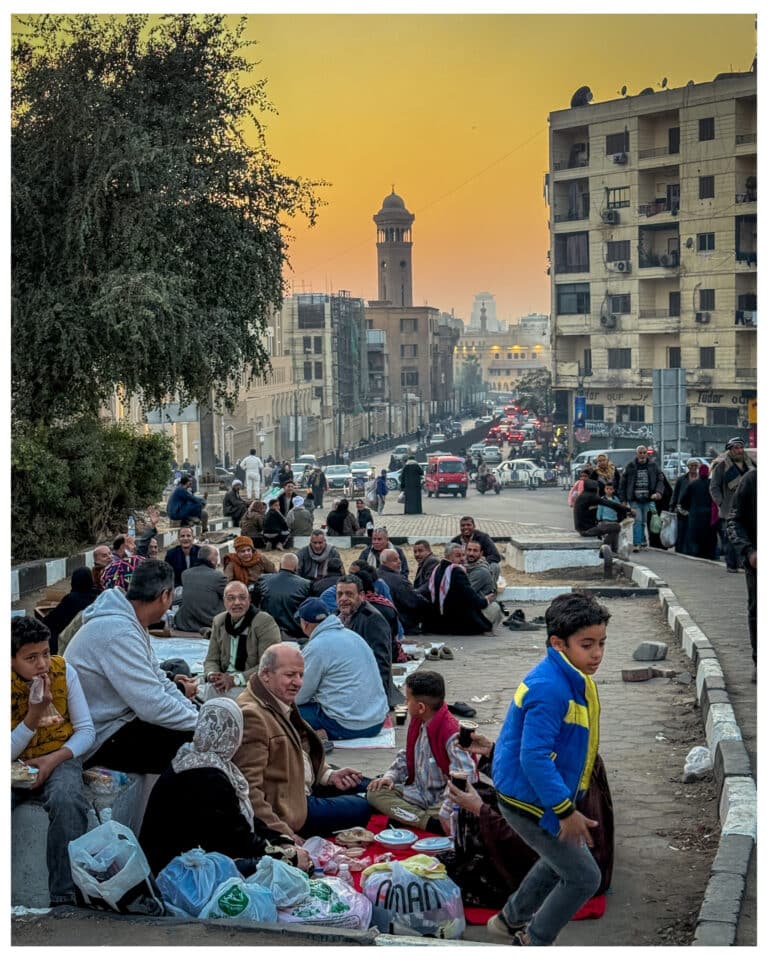
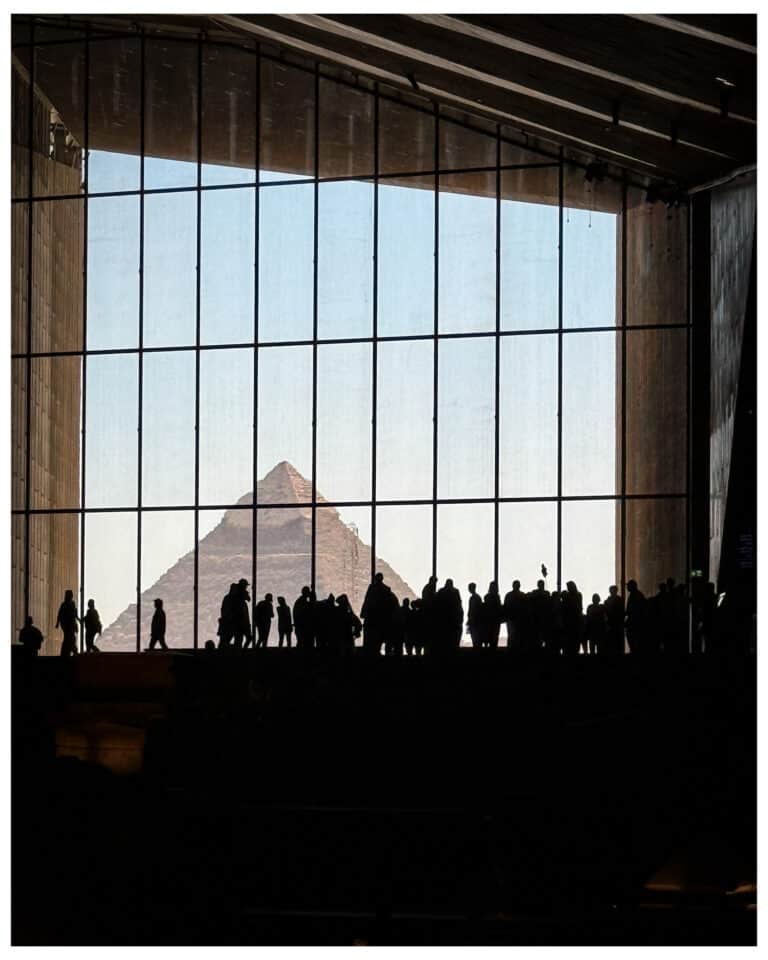
Most visitors to Egypt anchor their itineraries in Cairo, chasing the heavyweight trifecta of the Great Pyramids, the Grand Egyptian Museum, and the Alabaster Mosque at the Citadel. Four days in the capital left us breathless, yet we still had two weeks of open road unspooling ahead. Our southward pivot began with a quick domestic hop down to Aswan, followed by a four-hour slog through the raw, blinding glare of the Sahara, broken up only by a stop at The Sarab Coffee Shop (be aware, the toilets are squatty and less than clean…). We rolled almost to the Sudanese border on the western bank of Lake Nasser, pulling straight into our hotel, The New Abu Simbel Hotel, with dust in our shoes and anticipation humming in the air.


The town of Abu Simbel is a tight, sun-baked, and deeply charming oasis hugging the edge of the lakeside archaeological zone. We checked into the New Abu Simbel Hotel, a crisp and spotlessly clean property run by Mohamad, a convivial owner who greeted us like long-lost family. We had actually booked our light and sound show tickets, as well as our tickets for the following day, through the hotel months before our arrival, meaning we didn’t have to stress about a thing. A delicious and hearty dinner later, Mohamad packed us into a rattling, high-speed tuk-tuk that zipped through the cool desert air, dropping us at the gates with plenty of time to spare.


We wandered past the usual cluster of souvenir stalls at the entrance and rounded a massive artificial rock dome (more on that later), where the Great Temple suddenly ripped open the dark. The crowd was remarkably thin, a sweet spot born of this remote frontier sitting miles off the standard whistle-stop bus route, paired with the quiet tension of the Iran/ Israel conflict that was brewing but had not yet fully broken out. We walked down a dimly lit path into the open-air amphitheater and let the desert night settle in.
An Evening of History and Lights


The evening projection cast dramatic floodlit illustrations and animations accompanied by a sweeping orchestral score directly against the ancient cliff facades. The narrative unfolded through the voices of the Pharaoh and his court, depicting four grand thematic points –
- The Rise of Ramesses: Tracing his early ascension as a co-regent and his grandiose architectural ambitions across the Nile valley. Ramessess || built an unmatched, landscape-wide propaganda machine designed to fuse his living image with the geography of empire. Across a 66-year reign, Ramesses II turned the entire Nile corridor into an unbroken monument to his own deification, anchoring southern Nubia with rock-cut frontier shrines, hijacking Thebes and Karnak with monumental entry gateways and his mortuary Ramesseum, and founding a glittering new military capital, Pi-Ramesses, up in the Delta.
- The Battle of Kadesh: Shifting, saturated colours recreate the tactical chaos where a cut-off Ramesses personally charged the Hittite lines under Amun-Ra to turn the tide of war.
- The Love for Nefertari: Shifts softly to the Small Temple, reciting original poetic inscriptions including his famous declaration that Nefertari is the one for whom the sun shines.
- The UNESCO Rescue Miracle: Bridges antiquity and the 1960s, detailing how international engineers sliced the cliff into multi-ton blocks to outrun the rising waters of Lake Nasser.
The site closed immediately after the final chord, so we retreated to the hotel, once again via our hotel supplied Tuk Tuk, to rest our eyes.
Before sunrise, we sat down for a rich, comforting Nubian breakfast of clay-pot eggs, fresh vegetables, local cheeses, and warm breads with yogurt and juice. Our trusted tuk-tuk returned us to the gates just as the first amber rays licked the sandstone. With the Aswan convoys still hours away, we had both temples virtually to ourselves, sharing the dawn silence with a small circle of travellers who had opted to sleep in town rather than ride the morning buses.
Walking those chambers at dawn made 1264 BCE feel terrifyingly close. The Great Temple was built as a blunt psychological boundary marker in a newly conquered, resource-rich Nubian frontier, forcing any arriving trader or army to look up at four seated, twenty-meter statues of Ramesses II declaring total imperial dominance after Kadesh. One devastating detail brings the sheer scale into sharp reality: the upper body and head of the second colossus snapped off in an ancient earthquake shortly after completion, and the colossal stone face and torso still lie broken directly at the foot of the throne. Standing right beside that fallen stone profile makes the towering height overhead feel dizzyingly real. Against the lower legs of the remaining colossi, smaller knee-high figures cluster tenderly—representing his mother Mut-Tuy, Queen Nefertari, and several royal children.


The Great Temple at Abu Simbel
Inside the Royal Temples
Inside the Great Temple’s grand hypostyle hall, eight colossal Osiride pillars depict the mummiform* king holding the crook and flail with stony authority. The walls burst with vivid painted reliefs in lapis blue, ochre yellow, and iron red, capturing Kadesh chariots, incense offerings, and the king receiving life from the gods. Deeper inside, reliefs break convention by showing Ramesses offering sacrifices to his own deified image. The inner sanctuary houses four seated figures aligned with the sun:
- Ra-Horakhty: Falcon-headed god of the rising sun and cosmic vitality.
- Amun-Ra: King of the gods and patron of the New Kingdom empire.
- Ptah: Underworld god of creation and craftsmen, engineered so his statue remains permanently in shadow.
- The Deified Ramesses II: Seated as an equal among the state pantheon.
The Small Temple stands adjacent as one of history’s grandest romantic gestures, dedicated to Queen Nefertari and the goddess Hathor. Its facade shatters artistic canon by rendering Nefertari’s exterior statues at the exact same height as the Pharaoh’s twelve-meter colossi, featuring four statues of Ramesses and two of Nefertari, flanked by smaller family statuary of their children. Inside, the first hall is supported by six square pillars featuring smiling Hathor-headed capitals. The high-detail painted walls glow with Nefertari in fine linen and a vulture headdress, standing shoulder-to-shoulder with or being crowned by Hathor and Isis as a living goddess bringing divine grace to the land.


The Small Temple – Abu Simbel

The Race to Save History
None of this would be standing here today without an engineering miracle that still boggles the mind. When the Aswan High Dam threatened to drown the valley in the 1960s, UNESCO and an international coalition of over 50 nations stepped in to rewrite fate. Between 1964 and 1968, workers made thousands of precision cuts with wire saws, slicing both temples into more than a thousand numbered blocks weighing up to 30 tons apiece. They hoisted every piece 65 meters higher up the slope and set them 200 meters back from the original waterline, reassembling them inside a hidden concrete dome covered by an artificial hill that mirrors the original mountain down to its exact solar alignment.
Stepping back out into the morning glare, the spell broke as the first distant rumble of tour buses signaled the arrival of the Aswan convoys. We made our way back to the hotel for warm, lingering farewell hugs with Mohamad and his son, trading promises to return if the desert ever calls us back. Well wishes sorted and hearts full, we turned our faces north toward Aswan.


Leaving Abu Simbel taught us the golden rule of Upper Egypt** – slow travel beats the conveyor belt every single time. Standing alone in a three-thousand-year-old sanctuary as the desert sun clears the horizon changes the entire equation from passive sightseeing to a genuine pilgrimage. Next up, we swap the deep southern silence for the granite quarries and felucca-dotted breeze of Aswan.
In The Know
* Mummiform: Shaped like a mummy. In ancient Egyptian art, this refers to a statue carved with a rigid, tightly wrapped silhouette and arms crossed over the chest, symbolizing divine resurrection and the god Osiris rather than a literal corpse.
**Ancient Egyptians named their regions based on the flow of the Nile River, which runs from south to north. Because the river flows downhill out of the central African highlands toward the Mediterranean Sea, the southern part of the country is called “Upper Egypt,” while the northern delta region is called “Lower Egypt.”
Since Abu Simbel sits almost as far south as you can possibly go in Egypt before hitting Sudan, it rests deep within what is historically and geographically classified as Upper Egypt.