
May 15, 2025 – A Day on the Dubrovnik Walls, Capped with a Sunset Above the City
🌅 Walls, Palaces, and a Sunset Above Dubrovnik
After a late night of catch-up with Ron’s sister Tami, we still managed to wake up early, excited to explore Dubrovnik’s legendary city walls and museums. Everyone we asked suggested beginning and ending our walk at Pile Gate, so that’s where we headed.
A Little Wall History
The Dubrovnik walls were built and expanded between the 8th and 17th centuries, evolving from simple ramparts into the impressive fortifications you see today. By 1453, the design was largely fixed, and over the centuries they stood firm against Saracen raiders, Ottoman threats, and even bombardment during the 1990s Yugoslav War. Their strength and resilience are part of why Dubrovnik is now recognized as a UNESCO World Heritage Site.
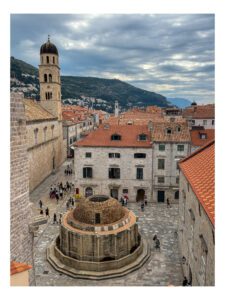
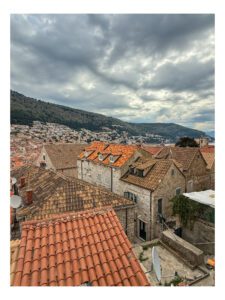
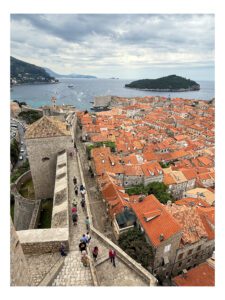
- Early Walls (8th–10th centuries): The first limestone forts and defensive sections appeared, with expansion to the east by the 9th century.
- Medieval Expansion (11th–13th centuries): By the 13th century, a single, continuous wall enclosed the city, as the sea channel separating Dubrovnik from the mainland was filled in.
- Golden Age Fortifications (14th–17th centuries): During the Republic’s height, the walls gained towers, fortresses, and thicker ramparts, some reaching 6 meters (20 feet).
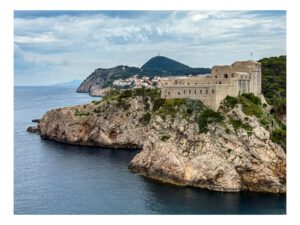
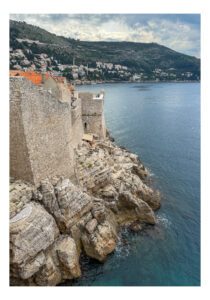
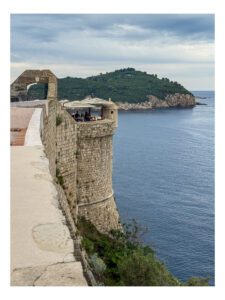
Unique touches within the Dubrovnik walls included mortar made from seaweed, eggshells, and sand, and a quirky medieval custom where each citizen was required to contribute a stone to the wall when entering the city.
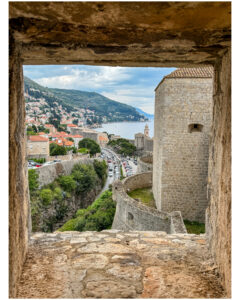
Being up on the walls, looking down over the city, the view was stunning but sobering. Our guide from yesterday’s tour had pointed out the bright orange rooftops — these mark the homes rebuilt after shelling in the 1990s. From above, you can clearly see how much damage Dubrovnik endured, and how painstakingly it has been restored.
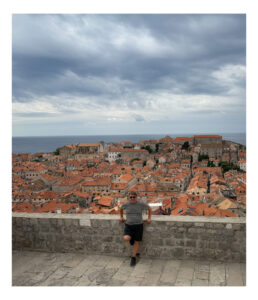
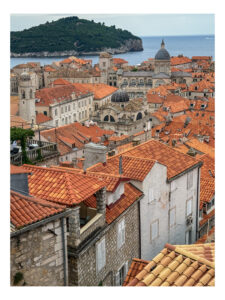
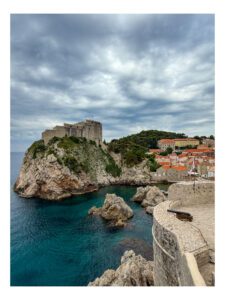
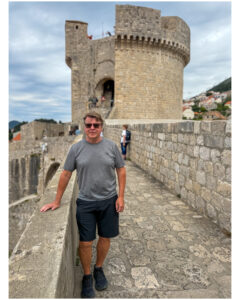
The full circuit took us nearly two hours with all the photo stops and moments of just soaking in the views. Along the way, we noticed little cafés and bars tucked into the walls themselves, perfect for resting over a cocktail or a cold beer. Walking the Dubrovnik walls is truly one of the best ways to experience this gem, and we highly recommend it.
Rector’s Palace and More
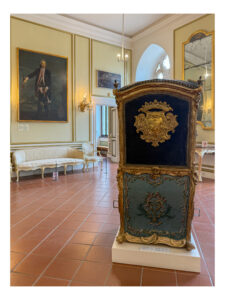
Once back at ground level, we decided to pop into the Rector’s Palace, also known as the Cultural History Museum. Unlike most palaces, this was never home to a monarch. Instead, it was where the elected Rector lived — but only for one-month terms, a clever system meant to keep corruption in check. This practice lasted until 1806 when Napoleon’s forces ended Dubrovnik’s independence.

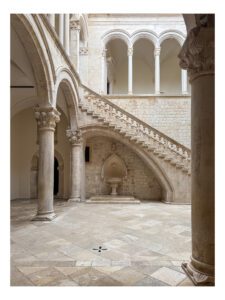
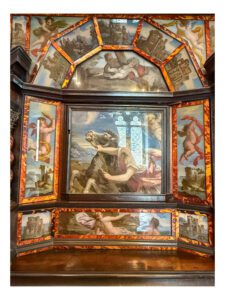
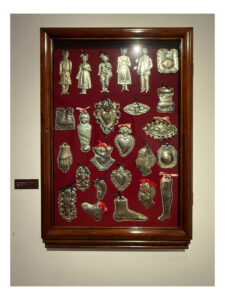
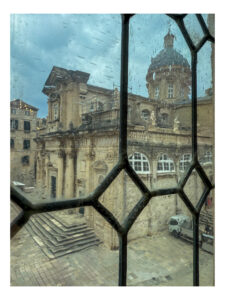
The palace today houses a fascinating museum, with more than 10,000 objects spanning the 15th to 20th centuries — furniture, weapons, photographs, even postcards. The courtyard is its most memorable feature, but fans of Game of Thrones will also recognize the building from several scenes. Some visitors say the museum is skippable, but we really enjoyed it, and combined with the walls and Franciscan Monastery, our Dubrovnik City Pass was well worth the cost.
Pizza, Views, and Sunset Dining
By the time we finished, hunger was calling, so we ducked into Pizzeria Mirakul, a little hole-in-the-wall pizzeria. We’re sticklers for wood-fired pizza, but this one was excellent, and hit the spot, along with our well earned beers.
Months earlier, we had managed to snag reservations at the Panorama Restaurant, perched high on the mountain above Dubrovnik Old Town. This is one of those bucket-list experiences, and if it’s on your radar, book as early as you can.
🚡 Quick Tip: The cable car to the top is only a 5–8 minute walk from Buža Gate, about 300 meters outside the walls. Round trip is €27 per person. Tickets can be bought online at dubrovnikcablecar.com or at the station. If you visit in peak season, get there early — the lineups can be long.
We arrived a little ahead of our reservation and were warned about incoming wind and rain. Since we had requested a table at the front of the outside patio, the manager kindly offered us an inside table with arguably even better views. We happily accepted, and sure enough, those who chose the patio ended up bundled up against the whipping wind.
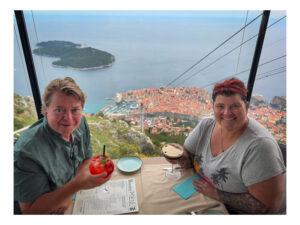
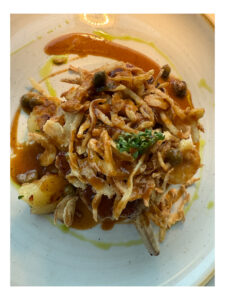

I often approach “tourist” restaurants cautiously, but Panorama exceeded expectations. Service was warm, unhurried, and friendly, and our server even helped us choose a fantastic bottle of wine. We lingered over cocktails, enjoyed an excellent meal, and watched the sunset give way to twinkling lights as Dubrovnik’s Old Town slipped into its nighttime cloak.
💡 Know Before You Go: You don’t have to eat at the restaurant to take the cable car up. Some people hike back down, but reviews suggest it’s a tough trail — so decide wisely! The restaurant’s menu changes seasonally, so check before you go to avoid disappointment; also to see the prices ahead of time to avoid ye olde sticker shock.
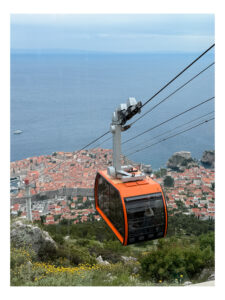
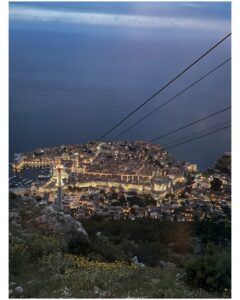
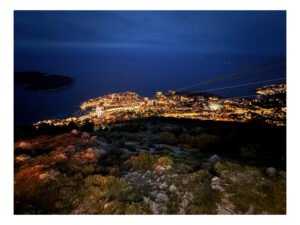
On the way back down, we lucked out with a spot at the front of the tram, giving us one last sweeping view of the illuminated walls and rooftops. Back at our condo, we ended the night with a nightcap on the deck, rehashing the day and already looking forward to the adventures yet to come.