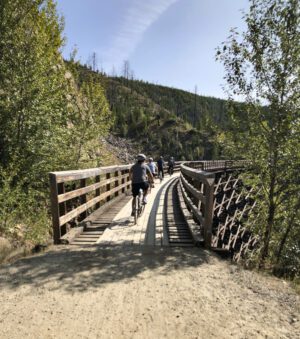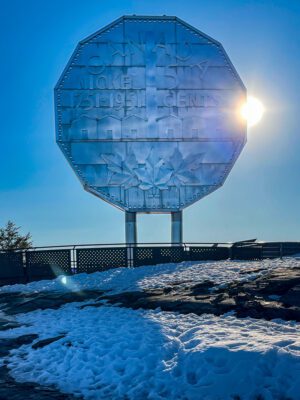

🇨🇦 Canada: The Great Wild Expansive
As Canadians, we are fully prepared to admit that we are completely biased about our own country—but in this exact case, the pride is entirely warranted. The untamed scale of Canada’s wilderness demands a complete shift in how you travel. This is a country that doesn’t just have nature; it is entirely consumed by it. It is a land where jagged, snow-draped mountain peaks pierce the sky, where ancient temperate rainforests meet the thunderous swells of the Pacific, and where vast, empty stretches of highway invite you to just drive until the radio signal fades to static.
Our Canadian journals are built from the driver’s seat and the trail edge. This isn’t a place for manicured, predictable itineraries. It’s a country meant for slow, deliberate exploration—where you can track wildlife through dense pine forests, watch the fog roll into rugged coastal inlets, or sink into the laid-back, creative energy of our mountain towns. Canada doesn’t adjust itself to fit your timeline; it demands that you adapt to its rhythm, lace up your boots, pack for three seasons in a single afternoon, and experience the true depth of a wild, spectacular backyard.
🇨🇦 Scrapbook Notes on Canada
- Population – Around 41.5 million people (and beautifully, over eighty percent of our population lives huddled within a few hours of the southern border, leaving the vast majority of our backyard completely wild and empty).
- Global Tourism Ranking – It holds the #18 spot in the world for total international arrivals. The country welcomes roughly 22 million visitors annually, though we are secretly proud that the real magic lies far away from the peak tourist corridors.
- Capital City – Ottawa – A clean, stately river city where neo-Gothic parliament buildings sit perched over historic canal locks, seamlessly blending a formal national core with a laid-back, outdoor-loving lifestyle.
- Most Visited Hubs – The jaw-dropping, glacial turquoise waters of Lake Louise in Banff National Park; the thunderous, misty roar of Niagara Falls; and the historic, cobblestone old-world charm of Old Quebec.
🇨🇦 Hidden Gems You Should Seek Out
Tofino and the Pacific Rim – A raw, mist-shrouded wilderness outpost on the outer edge of Vancouver Island where towering, ancient temperate rainforests crash directly into the thunderous, slate-gray swells of the Pacific Ocean, famous for wild winter storm-watching.
The Badlands of Drumheller – A striking, alien landscape hidden right in the middle of the sweeping Alberta prairies, where wind-sculpted hoodoo rock chimneys and deep clay canyons reveal one of the richest dinosaur fossil beds on the planet.
The Cabot Trail and Cape Breton – A legendary, windswept highway that clings dramatically to the sheer northern cliffs of Nova Scotia, offering drivers a breathtaking loop of rugged ocean drop-offs, deep forested highlands, and isolated Acadian fishing villages.
🇨🇦 Know Before You Go: Canada Basics
Before you fuel up the car to tackle the expansive highways and rugged trails, here are the essential basics to keep your local adventures seamless.
- Language: English and French. While English is the primary language spoken across the western provinces and most major hubs, French takes center stage the moment you cross into Quebec and parts of the Maritimes.
- Currency: Canadian Dollar (CAD). We are an almost entirely cashless, digital-first society. Credit cards, debit chips, and Apple/Google Pay are universally standard everywhere from mountain gear shops to remote provincial park gates. However, it’s always smart to keep a small roll of Loonies and Toonies in your glovebox for coin-operated campsite showers or remote island ferry parking meters.
- Best Time to Visit: To catch optimal hiking weather, open mountain passes, and brilliant wildlife viewing, aim for late June to September (Summer). However, if your soul craves fiery autumn colours mirroring off glassy lakes without the peak summer tourist traffic, October is a spectacular window for a road trip.
- Getting Around: The absolute rule of Canadian travel is simple: you need a car. The sheer distance between destinations is massive, and our public rail and bus networks don’t service the remote trailheads or hidden coastal gems. Renting a car or packing up your own vehicle is the only true way to secure exploration freedom. Crucial Tip: If you are driving through mountain passes in the shoulder seasons or winter, always double-check provincial laws regarding mandatory winter or winter-rated (M+S) tires!