“Paris is Always a Good Idea”
One of my favorite quotes from the indomitable Audrey Hepburn makes her case for traveling to Paris, and this year, we put that theory to the test in a big way. We embarked on our largest journey yet: three continents, thirteen countries, ninety-two days, all starting in Paris. We’ve been home two weeks now, and I’ve been wrestling with how to even approach writing about this trip, because it was so packed with sights, experiences, and iconic places…the works. With past trips (which I still haven’t fully finished covering), I tried a daily journal-style post, but I’m not sure how effective that really was, so this time, I’m switching it up. I’m going to go a bit by feel, touch on what we did, and linger on what stuck with me.
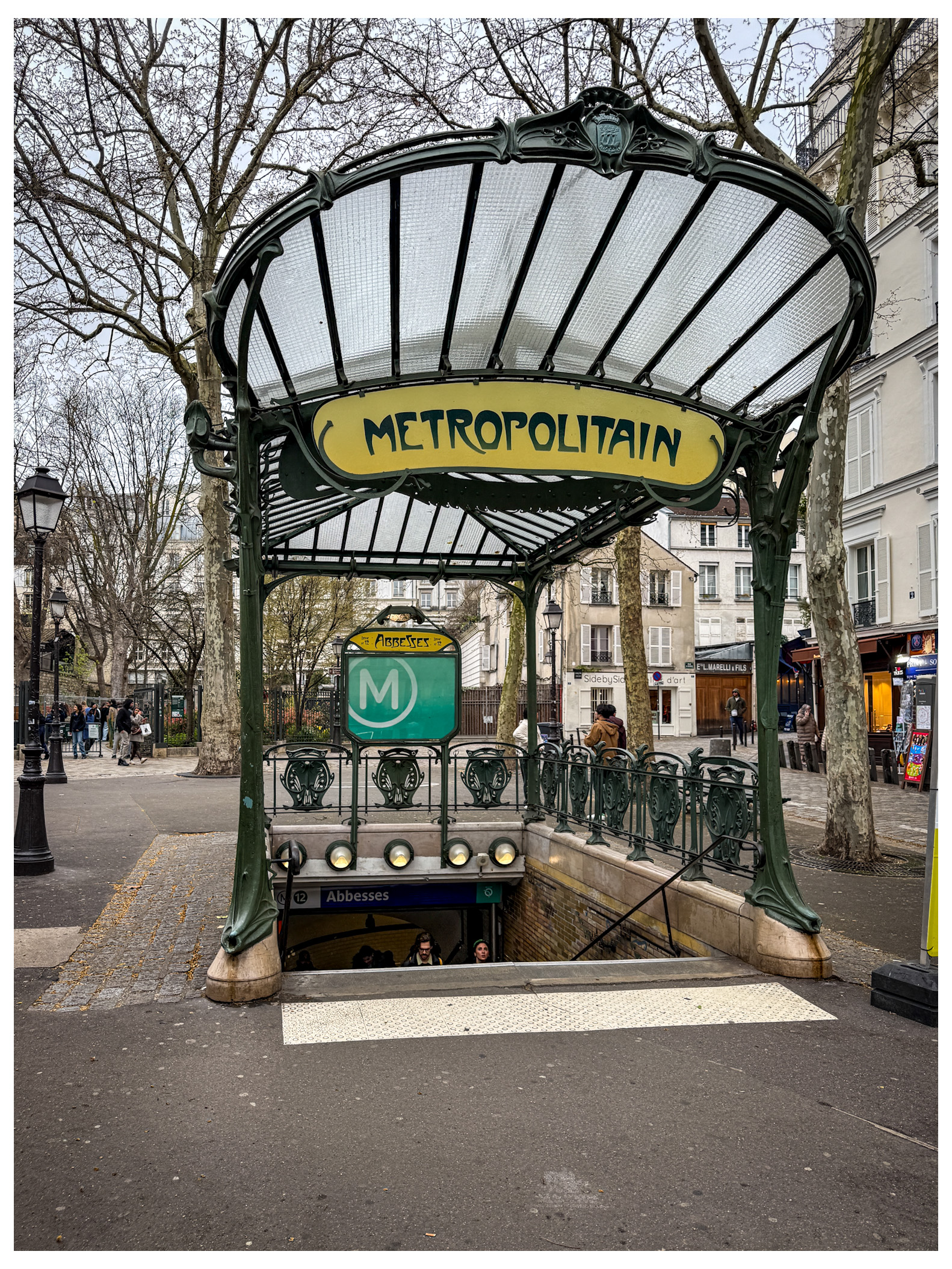
I’m going to start, fittingly, with an entrance, an entrance unlike almost any other: the Art Nouveau, stained-glass entry to Metro Line 12’s Abbesses station in Montmartre, Paris. Cast in wrought iron, decorated with plants and those classic, delicate Art Nouveau flourishes, with a covered walkway, this is easily one of the most beautiful metro entrances you will ever come across. Designed by Hector Guimard at the turn of the 20th century, this particular pavilion was originally located at the Hôtel de Ville. But in 1972, when the hotel needed an underground parking lot, the canopy was slated for destruction. Of the original ten canopies, only this one and the one at Porte Dauphine remained, as appreciation for their artistry hadn’t yet caught on; city officials saw them as dated and hard to maintain, and transit planners went about dismantling them with enthusiasm.
It took international embarrassment, spearheaded by the Metropolitan Museum of Modern Art in New York City, over the destruction of the Guimard pavilions to shift the French government toward preserving its 19th- and 20th-century architecture. They stepped in and declared the Guimard pavilions Historic Monuments, eight pavilions too late, if you ask me. So the Paris Transit Authority reluctantly dismantled the pavilion and moved it to where it now sits, fittingly, in the heart of artistic Montmartre. The Porte Dauphine pavillion remains where it was orignally placed on December 12, 1900, at the entrance of Metro Line 2. The Chatelet station also has a Guimard-like pavilion entrance but it is a recreation, built and installed in the year 2000, so not an original.
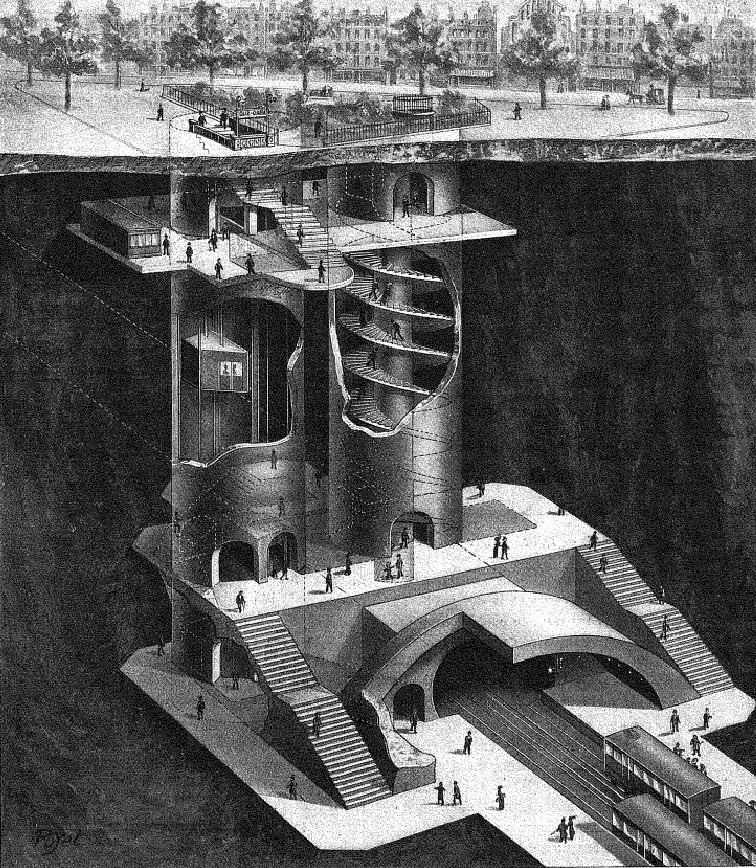
Beyond that beautiful pavilion, Metro Line 12 also holds the distinction of being the deepest metro line in the city. Montmartre’s hillside was mined for gypsum for centuries, leaving behind a warren of tunnels that builders had to work around, or, as they eventually decided, to go below. They built two shafts: one for a double, winding spiral staircase of 176 steps to reach the line 36 meters down, and one for two passenger elevators for those who’d rather not, or simply can’t, do the stairs. The double staircase itself twists like a strand of DNA, the two sides wrapping around each other but never intersecting or crossing: one set for going down, one for coming up, keeping foot traffic flowing without congestion.
Metro Line 12’s beautiful Guimard pavilion felt like a fantastic beginning to our journey. I hope you’ll join me as I try to relive the rest of it.