Exploring Montmartre, Paris
Our most recent trip to the Middle East, Southeastern Europe, Eurasia, and Western Asia started in Paris, France. Basically we used it as a stopover to get over our jetlag, and to explore parts of Paris we hadn’t had time to see the first time we were there. On our list was the 18th arrondissement, otherwise known as Montmartre.


Montmartre: A Rainy Walk Through Art, History, and Heartbreak on the Hill
If you trace Montmartre’s history back far enough, you land in Roman times, when this hill was sacred to Mars and Mercury. It is also where Paris’s first bishop, Saint Denis, met his end around AD 250, beheaded by the Romans for refusing to abandon his Catholic faith. From that moment on, the place carried a new name: the Mount of the Martyr.
Fast forward to the 1100s, and King Louis VI established a powerful Benedictine convent up here. The nuns got to work planting the area’s first vineyards and keeping the famous windmills spinning, grinding wheat, corn, and grapes for the community.
Then came the late 1700s and that notorious Wall of the Farmers-General. Built between 1784 and 1791, this twenty-four kilometre fiscal barrier was not meant to keep invaders out. Its sole job was to collect the octroi, a tax on every last thing that entered Paris. The chemist Antoine Lavoisier came up with the scheme to catch smugglers and outside tavern owners who were selling untaxed wine, but all it really did was make daily life more expensive for ordinary people. Parisians despised those neoclassical tollgates, and when the Revolution erupted in July 1789, they set many of them ablaze. Lavoisier himself did not escape the fallout, losing his head to the guillotine in part because of his connection to that hated tax system.
Montmartre stayed independent of Paris until 1860, and that meant one big perk: no city taxes, so alcohol stayed cheap. The hill turned into a full-blown playground of drinking dens, open-air guinguettes, and eventually cabarets like the Moulin Rouge. Rent was low, which drew in a wave of broke, hungry young artists. Picasso, Van Gogh, Toulouse-Lautrec, and Renoir all called this place home at some point, painting, arguing, and drinking their way through nights that would reshape modern art forever. In 1871, the hill became the bloody heart of the Paris Commune uprising. Not long after, construction started on the Sacré-Cœur Basilica, meant as a conservative act of national penance and spiritual renewal. By the 1850s and 60s, the old tax wall had already been torn down, part of Napoleon III’s grand expansion of the city. It no longer marked the edge of town, so it simply disappeared.
The Basilica of Sacré-Cœur
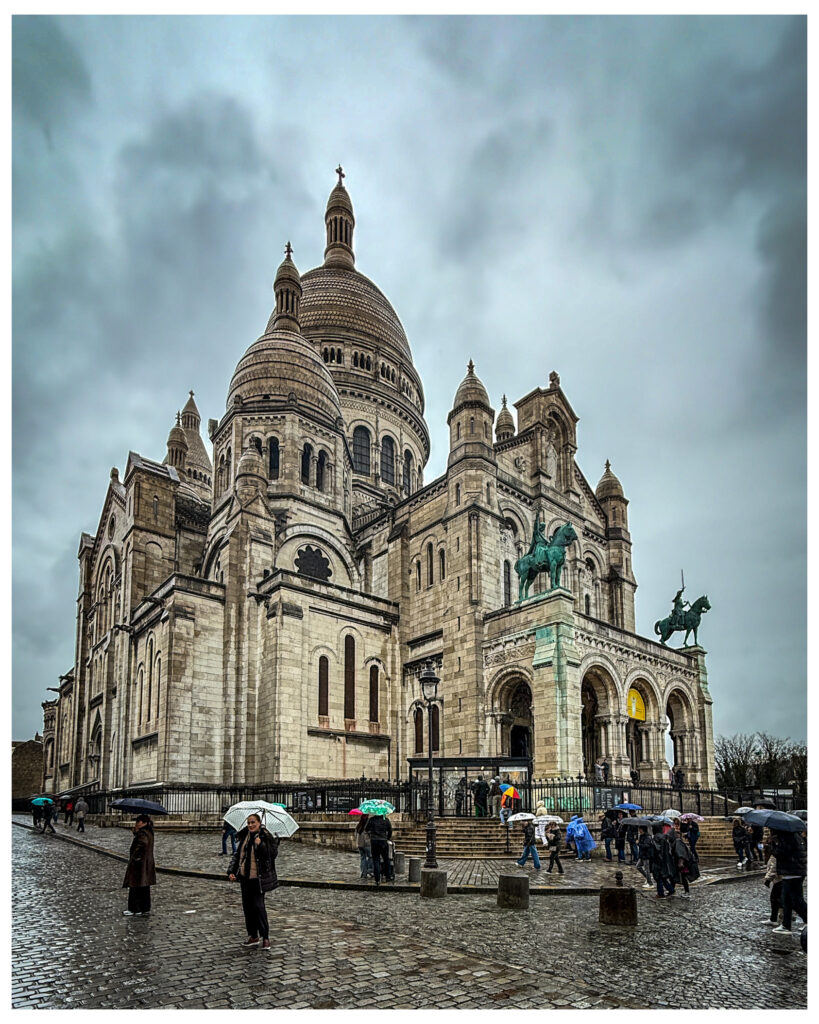
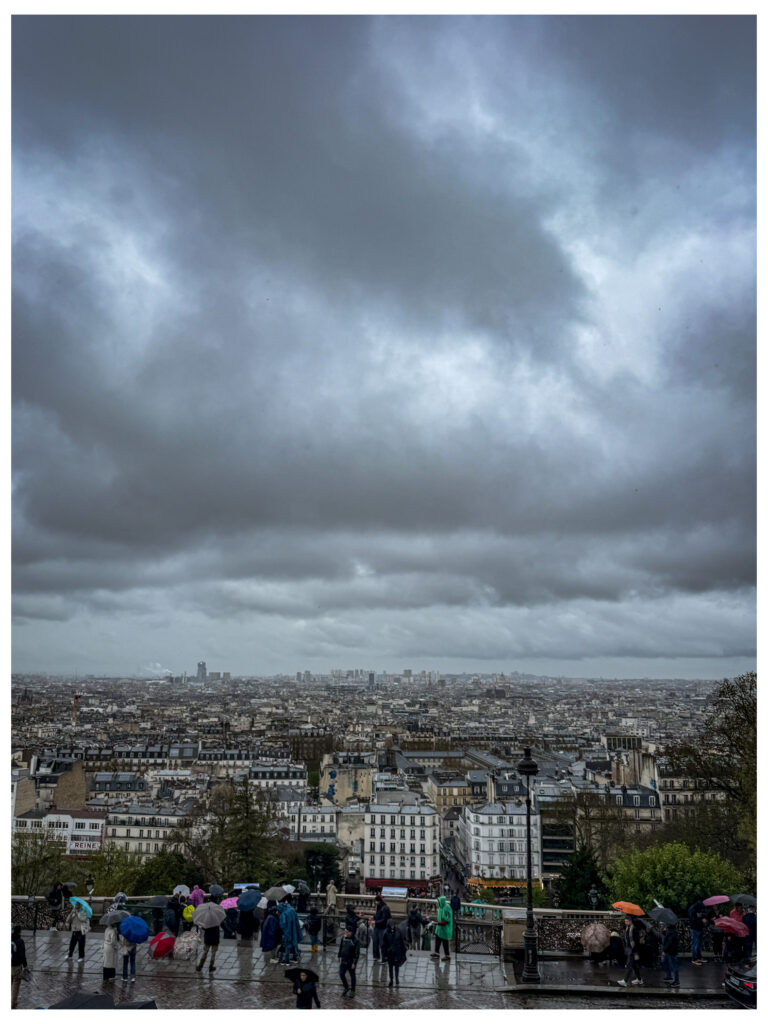
Rising like a great white wedding cake at the highest point of the city, the Sacré-Cœur Basilica is impossible to miss from almost anywhere in Montmartre. Construction began in 1875, a project born out of a conservative Catholic movement that saw the defeat of France in the Franco-Prussian War as a moral failure requiring national penance. The architect Paul Abadie designed it in a Romano-Byzantine style that stood out sharply from the Gothic cathedrals of Paris, and he chose that brilliant white stone from Château-Landon because it hardens and exudes its own calcite when exposed to rain, keeping the basilica gleaming even after all these years. It took forty-four years to complete, with Abadie himself dying long before the final stone was laid in 1919, and inside you will find one of the world’s largest mosaics, the striking Christ in Majesty that covers the entire apse ceiling. Climb the three hundred steps to the dome and you are standing at the second-highest point in Paris, beaten only by the Eiffel Tower, with a panoramic view that stretches for miles on a clear day. It has always been a bit controversial, a conservative monument planted right on the hill that gave birth to the Paris Commune, but love it or hate it, it has become the defining silhouette of Montmartre.
The Church of Saint-Pierre de Montmartre
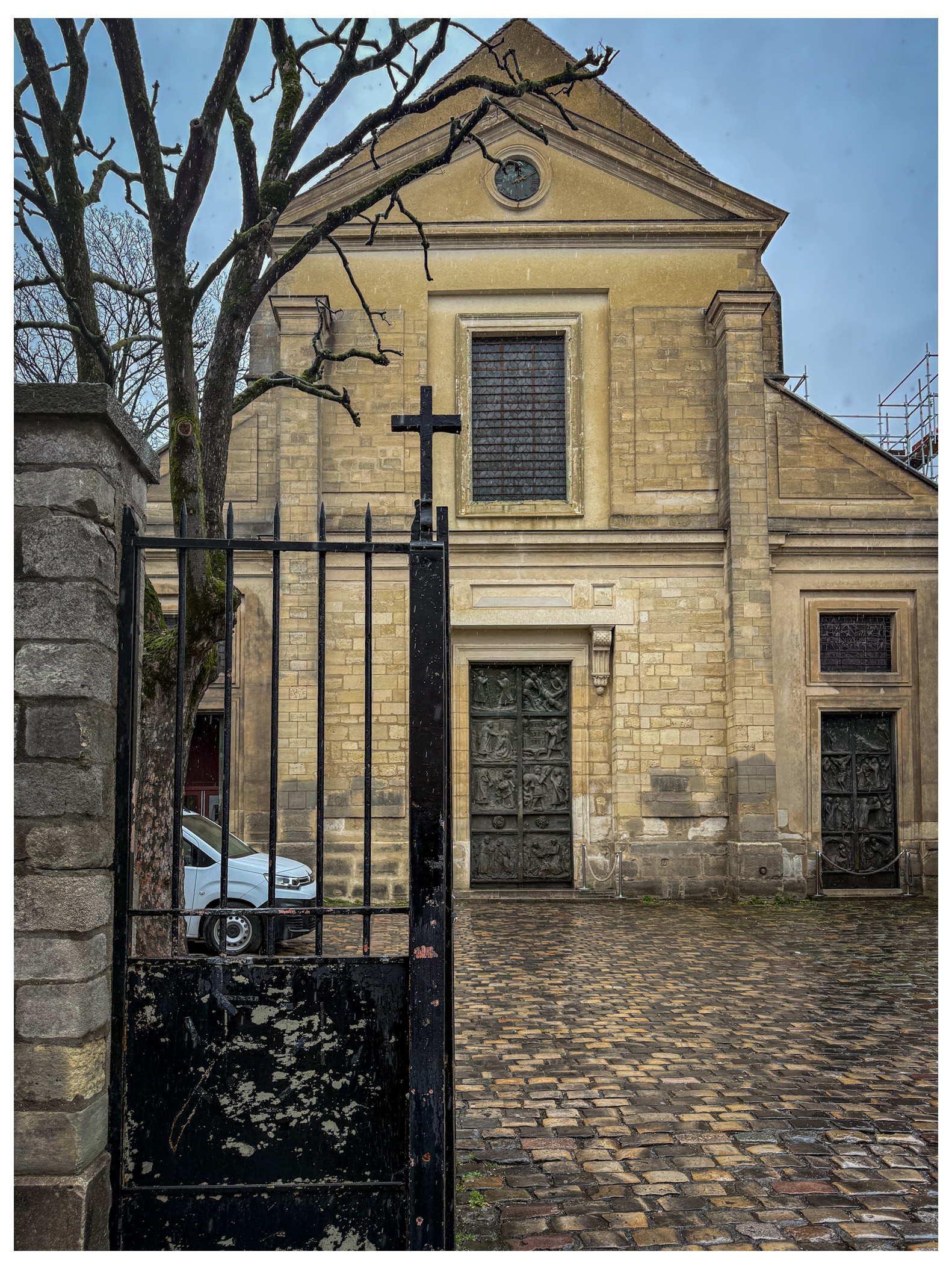
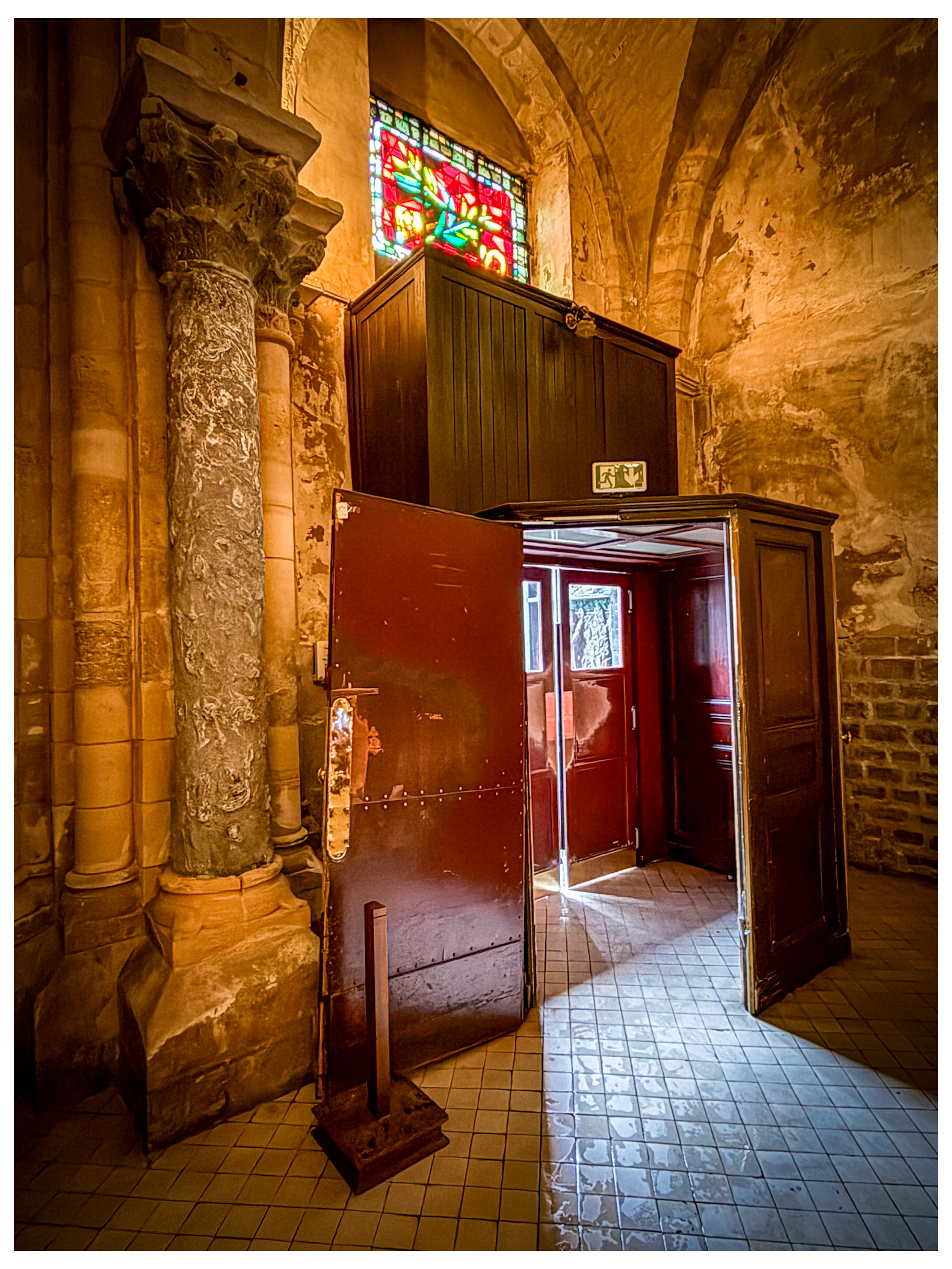
Just a few steps from the basilica, tucked behind the ivy-clad walls of the old Montmartre Abbey, stands the Church of Saint-Pierre, a far quieter and older piece of history. This is actually the second oldest church in Paris, after the Cathedral of Notre-Dame, and its foundations reach all the way back to the sixth century. The Merovingian queen Sainte Geneviève, the patron saint of Paris, is said to have built a small chapel here around 520 AD, and a church has stood on this spot ever since. The current building dates from the twelfth century and was once part of that powerful Benedictine abbey founded by King Louis VI, the same nuns who planted the vineyards and operated those famous windmills. You can still spot remnants of the old Roman road that ran along the summit, and the church itself has a weathered, unadorned simplicity that feels miles away from the gleaming white basilica next door. It survived the Revolution when it was turned into a warehouse, and it survived the construction of Sacré-Cœur when the city decided to tear down much of the old abbey around it. It does not get the crowds or the postcards, but step inside and you will feel the weight of fifteen hundred years of prayer.
The Moulin Rouge
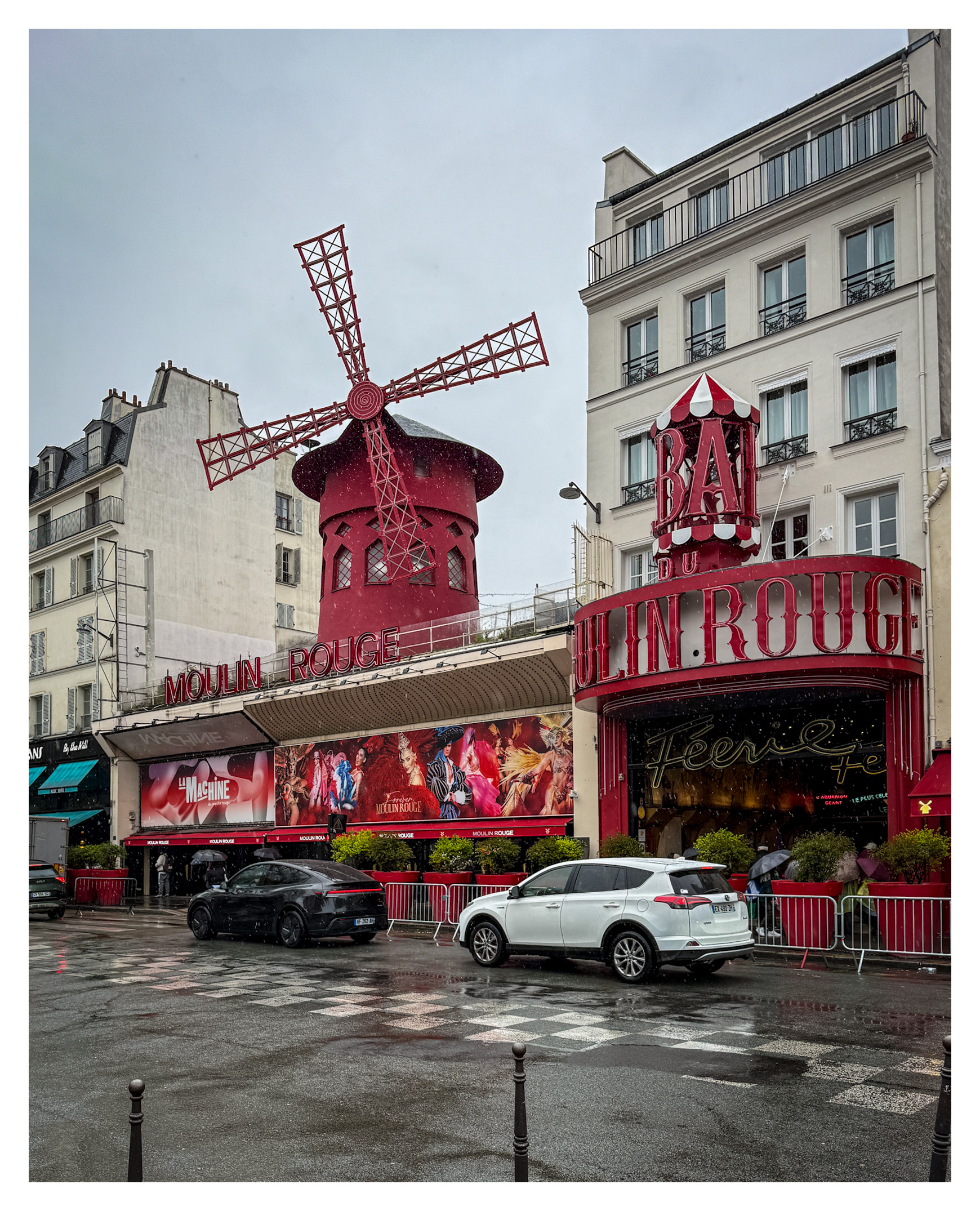
The Moulin Rouge opened its doors on October 6, 1889, the same year the Eiffel Tower went up, and it has been spinning tales of revelry ever since. Two bold businessmen, Joseph Oller and Charles Zidler, built it at the foot of the Montmartre hill, calling it “the biggest and most beautiful of cabarets; a temple dedicated to Woman, the Dance and the Cancan.” The giant red windmill perched on top was a nod to the old mills that once dotted the neighbourhood, a playful tribute to the area’s working-class past, and they painted it red so it could be seen from everywhere in the city. Right from the start, it was a place where everyone mixed together, bourgeois and bohemian, artists and laundry girls, all packed into a lavish garden that even featured a giant plaster elephant. It was here that the scandalous French can-can truly took flight, with legendary dancers like La Goulue and Jane Avril kicking up their skirts and shocking the world, their images forever captured in the now-iconic posters of Henri de Toulouse-Lautrec, who came here nearly every night to drink and sketch. A fire gutted the original building in 1915, but it rose from the ashes and reopened in 1921, and it still hosts spectacular revues every single night of the year.
La Moulin de la Galette
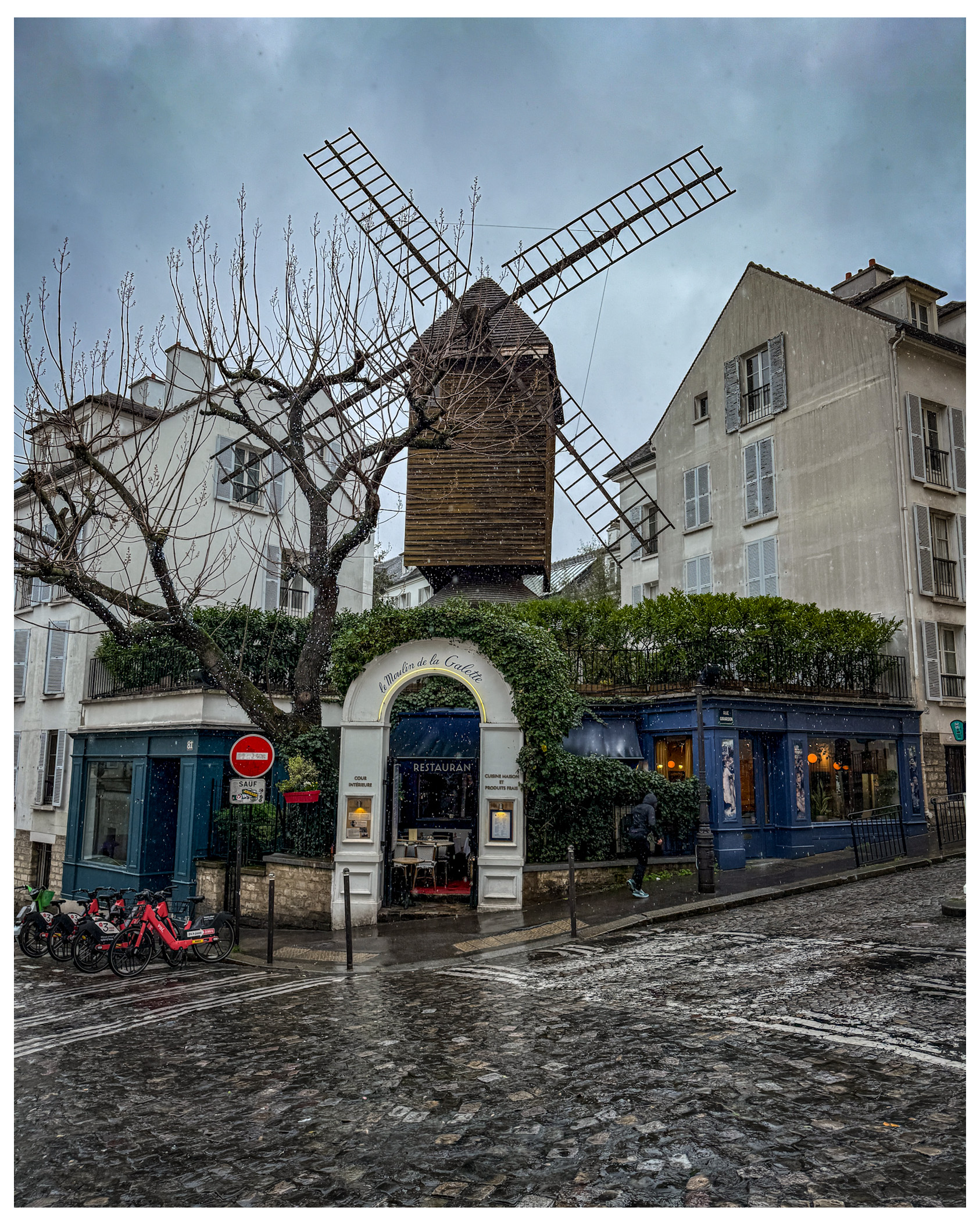
Up on the Montmartre hill, tucked at the corner of Rue Lepic and Rue Girardon, you will find the last working windmill of the thirteen that once dotted the butte. It is actually two windmills in one, the Blute-Fin built in 1622 and the Radet from 1717, joined together when the Debray family acquired both in the early 1800s. The family milled flour here for years, but they also made a brown rye bread called galette that became so popular it gave the whole place its name. By 1834, they had opened a guinguette underneath the mill, a lively open-air tavern where Parisians could escape the city for a glass of wine, some dancing, and that famous bread. What happened next was not so cheerful. During the sieges of Paris in 1814 and again in 1870, three Debray men lost their lives defending the mill, and the stories say they were nailed to the wings of the windmill.
Then came the artists. In the summer of 1876, Pierre-Auguste Renoir rented a small studio on Rue Cortot and set up his easel right in the middle of the Sunday afternoon crowd at the Moulin de la Galette. He painted the scene on the spot, lugging his massive canvas back and forth with the help of his friends, and the result was Bal du moulin de la Galette, one of Impressionism’s most celebrated masterpieces. The painting shows a sun-dappled crowd of working-class Parisians drinking, chatting, and dancing under the trees, and Renoir packed it with familiar faces. His friends Georges Rivière, Franc-Lamy, and Norbert Goeneutte sit at a table in the foreground, while the Cuban painter Pedro Vidal dances in the middle distance with Margot, who was Renoir’s lover. The whole thing glows with flickering light and colour, the brushstrokes so fluid and free that critics at the time had no idea what to make of it. Today it hangs in the Musée d’Orsay, and the mill itself still stands, a restaurant now, but still a monument to that golden, bohemian moment when Montmartre was the centre of the world.
Dalida Park
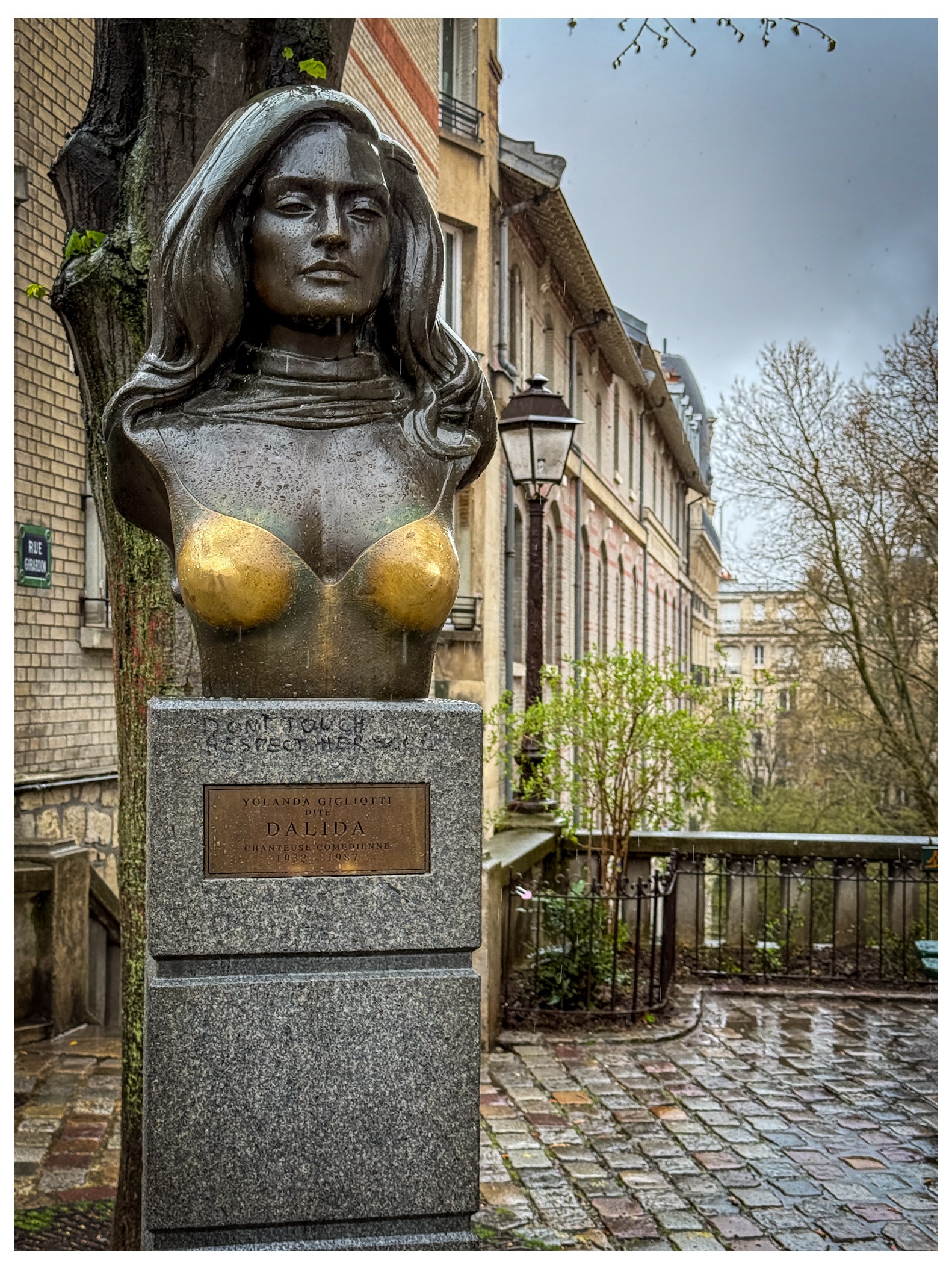
Tuck into the corner of Rue Girardon and Rue de l’Abreuvoir and you will find this tiny square, a quiet little pilgrimage spot for anyone who loved the French-Italian singer Dalida. She lived just up the street at 11 bis Rue d’Orchampt, a white art deco house she bought in 1962 that became her refuge for twenty-five years. In 1996 the city named this corner after her, and the following year they added a bronze bust sculpted by Alain Aslan to mark the tenth anniversary of her death. Fans still leave flowers and handwritten notes tucked around the granite base, and if you look closely you will notice the bust itself has a certain golden sheen, worn smooth by decades of admirers reaching out to touch it.
Behind that dazzling smile and those unforgettable hits, though, Dalida carried a lifetime of sorrow. She married Lucien Morisse, the radio director who launched her career, in 1961, but the marriage quickly unravelled after she fell for someone else. Her most publicised romance came in 1967 with Italian singer Luigi Tenco, but that same year his song failed to qualify for the Sanremo Festival and he shot himself in his hotel room, with Dalida the one who found him. Years later she fell for a young student named Lucio and became pregnant, but abortion was illegal at the time so she had the procedure done secretly in Italy. The operation left her sterile, a devastating realisation that only hit her years afterwards, and she once told a newspaper, “The regret of my life is not having a child… I was wrong about everything.” Tragedy kept circling back. Her ex-husband Morisse shot himself in 1970, her close friend singer Mike Brant jumped to his death in 1975, and another former lover, Richard Chanfray, also took his own life in 1983. Through it all she kept performing, kept smiling, but friends recalled her often speaking sadly of not being a mother, carrying a private grief beneath her glittering public image. On May 3, 1987, she took her own life in her Montmartre home, leaving a note that simply read, “Life has become unbearable for me. Forgive me.”
It is an unassuming little corner, easy to walk straight past, but that is exactly what gives it its charm, a quiet monument to a woman who adored this neighbourhood until the very end.
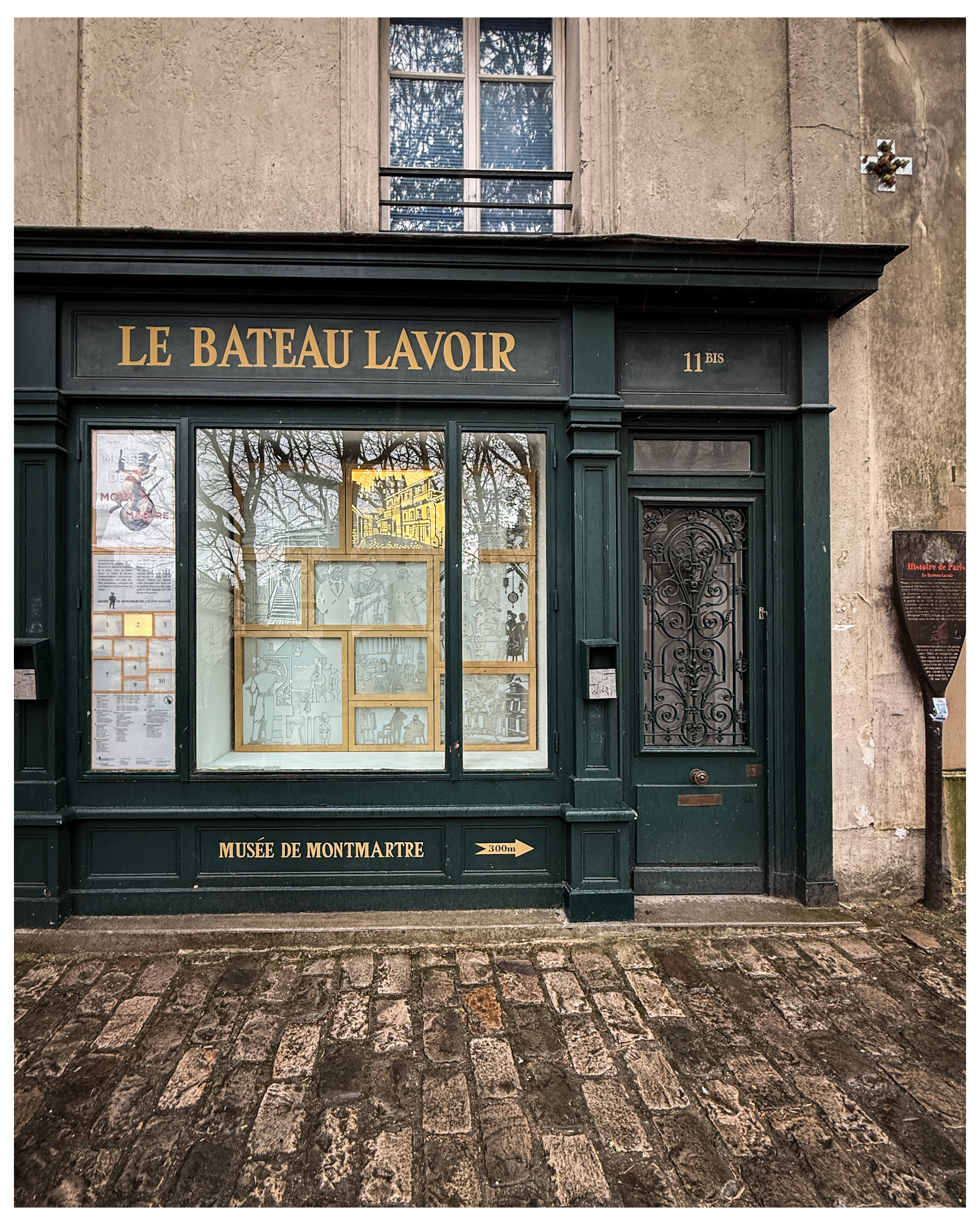
Le Bateau-Lavoir
Number 13 Rue Ravignan looks like nothing special from the outside, but this ramshackle building started life as a piano factory before becoming a squat divided into tiny, unheated workshops. The poet Max Jacob gave it the nickname “washing boat” because it creaked and swayed so badly in storms that it reminded everyone of the laundry boats moored on the Seine. Between 1900 and 1914, it turned into the beating heart of modern art, housing Picasso, Modigliani, and Van Dongen, and it was right here that Picasso painted Les Demoiselles d’Avignon in 1907. A fire ripped through most of the place in 1970, but it was rebuilt in 1978 and still stands today as a monument to that wild, penniless, brilliantly creative era.
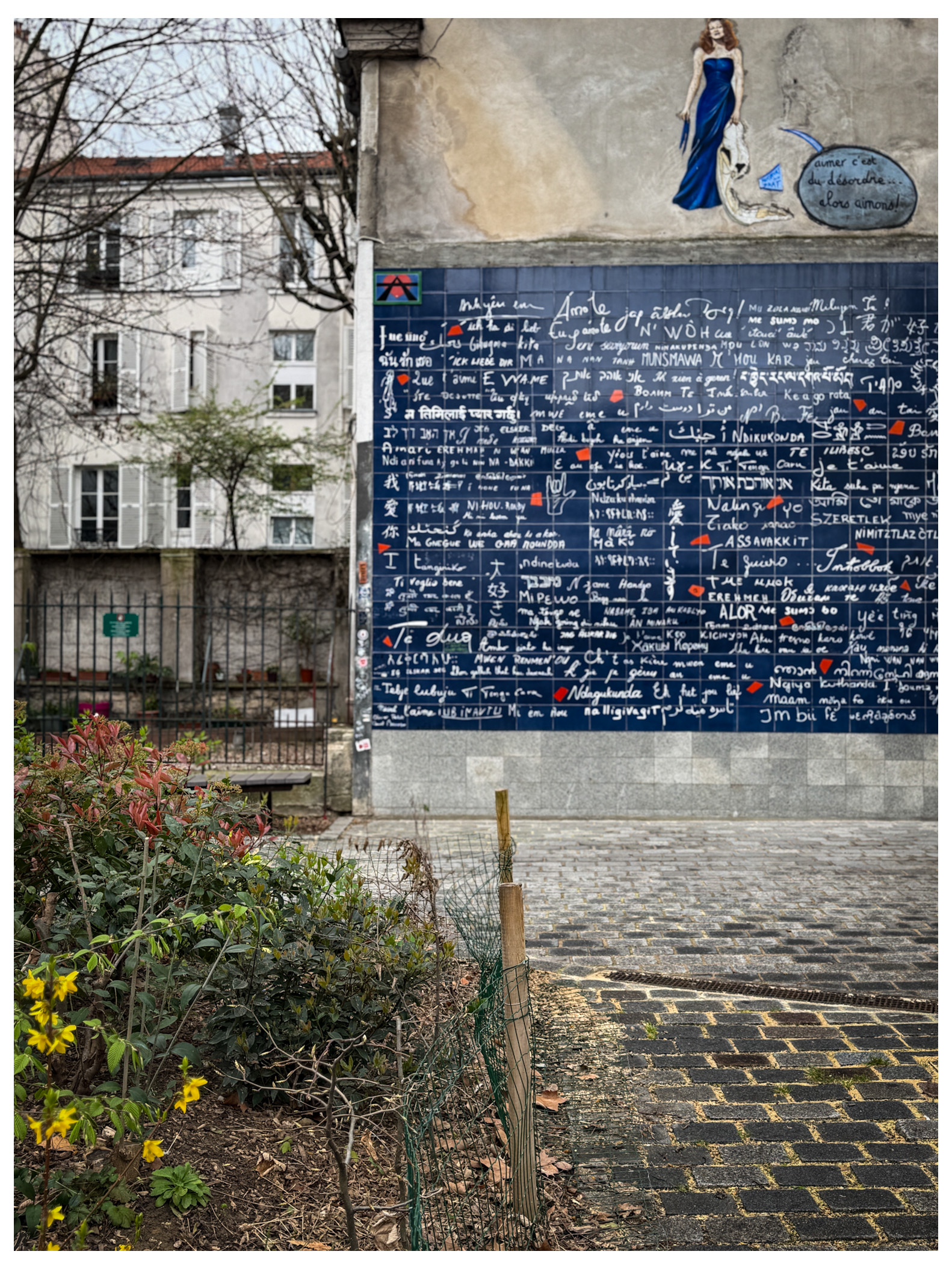
The I Love You Wall
Over in the small Square Jehan Rictus, just off Place des Abbesses, there is a forty-square-metre wall covered in 612 tiles of enamelled lava. The artist Frédéric Baron and calligrapher Claire Kito put it together in 2000, filling those tiles with “I love you” written 311 times in 250 different languages, from Navajo to Esperanto. The red splashes scattered across the surface are meant to represent the pieces of a broken heart, waiting to be put back together. It is sweet and sentimental and completely free, which in Paris always feels like a small victory.
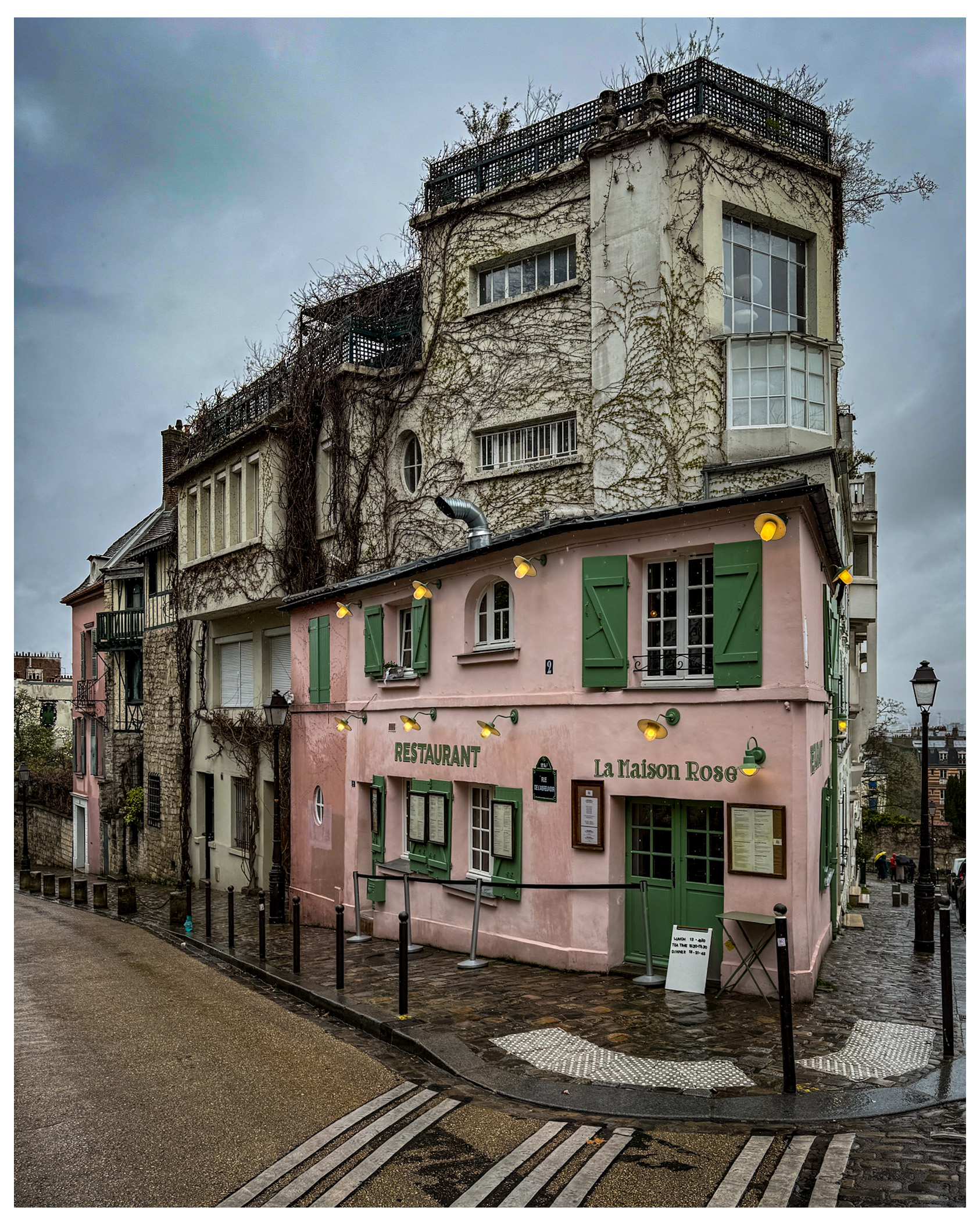
La Maison Rose
That famous pink house at the corner of Rue des Saules and Rue de l’Abreuvoir has been a Montmartre fixture since 1908, when the dancer Germaine Pichot and her painter husband Ramon opened it as a canteen for their artist friends. Picasso and Modigliani came through those doors, and so did Edith Piaf and Jacques Brel later on, while Maurice Utrillo painted it into more than a few of his canvases. The story goes that Germaine painted it pink after a trip to Catalonia, inspired by all those bright colours she saw down there. These days it is one of the most photographed spots on the hill, still running as a restaurant, though the crowds snapping selfies out front are a long way from its bohemian glory days.
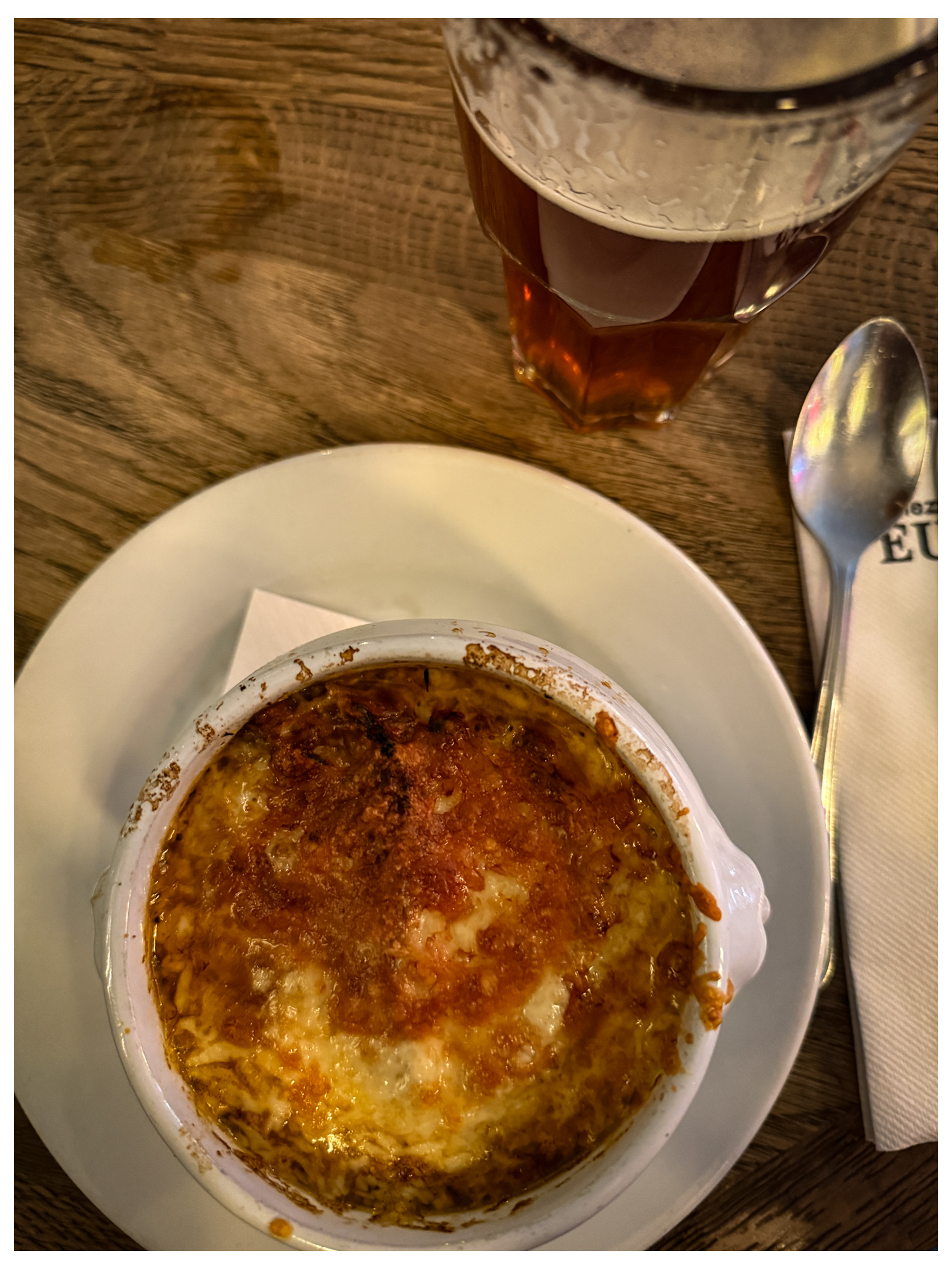
Lunch at Restaurant Chez Eugene
We ducked out of the rain at Restaurant Chez Eugene, a cozy little bistro on Place du Tertre that has been feeding hungry Parisians since 1920. I ordered a steaming bowl of French onion soup, the kind where the cheese stretches in long, gooey strings when you pull your spoon up, and a dark, malty beer that warmed me right down to my soggy socks. We grabbed a table by the window overlooking the square, which on that grey afternoon was a ghost of the bustling market that fills it on sunny mornings, just a few lonely stalls huddled under tarps and a handful of determined shoppers dashing through the puddles. The soup was rich and savoury, sweet with caramelised onions and thick with melted cheese, exactly the sort of thing you need on a day like that, and the beer had a deep, almost coffee-like bitterness that cut through the richness perfectly. The waiter was the kind of proper French old-timer who did not have time for tourists, but he cracked a smile when I managed to order in my clumsy French, and by the time we pushed our empty bowls aside I had forgotten all about the chill outside.
A Rainy Day Well Spent
The rain came down in steady sheets the whole time we wandered, turning those steep, cobbled lanes into slippery slides that kept us clutching each other’s elbows. My feet were soaked through before we even made it to the first stop, and more than once I found myself gripping a wrought iron railing a little too tightly, praying I would not go skidding down the hill. But even with the damp and the cold and the constant threat of a clumsy tumble, there was something magical about poking around this tiny corner of Paris in the grey. The crowds were thin, the light was soft, and every crooked alley and tucked-away square felt like it belonged just to us for a few quiet moments. The rain could not wash away the layers of history or the ghosts of all those artists and lovers and dreamers who once called this hill home, and by the end of it I was glad for every slippery step. Montmartre in the rain is not the postcard version, but it might just be the real one, and that is worth getting wet for.