
🇷🇸 Serbia: Gritty Energy & Fortified History
If you are looking for a destination that wears its heart on its sleeve and refuses to apologize for its rough edges, Serbia is your answer. This central Balkan powerhouse boasts a raw, magnetic pulse that catches you completely off guard. It is a land where grand, war-torn history directly collides with an incredibly vibrant, modern social scene. Serbia doesn’t dress itself up for tourists; it invites you to take it exactly as it is, offering a brilliant mix of monumental fortresses, deep Orthodox heritage, and an infectious, late-night cafe culture.
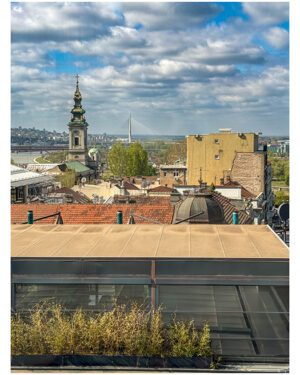
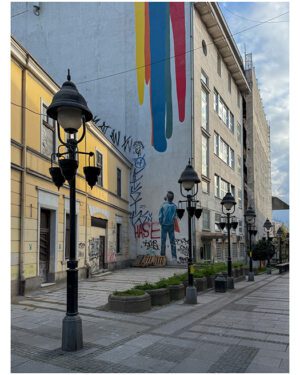
Your journey here is centered around a capital city that has been destroyed and rebuilt over forty times. In Belgrade, you can feel the heavy, fascinating layers of Roman, Ottoman, and socialist history echoing through the streets. You can spend an entire afternoon exploring the sprawling stone ramparts and hidden bunkers of the legendary Kalemegdan Fortress, standing right at the edge of the cliffs to watch the spectacular sight of the Sava and Danube rivers crashing together below. From the bustling pedestrian energy of Knez Mihailova to the majestic, looming white marble of the Temple of Saint Sava, Serbia invites you to look past the misconceptions, sit down over a strong coffee, and absorb the unstoppable momentum of a country that always finds a way to thrive.
🇷🇸 Scrapbook Notes on Serbia
- Population – Around 6.6 million people (with a highly resilient spirit and a legendary, deep-seated passion for communal gatherings, food, and open-air celebration).
- Global Tourism Ranking – Securely holding the #74 spot in the world for international tourist arrivals. The country welcomes roughly 2.1 to 2.5 million visitors annually, standing proud as an exceptionally raw, authentic, and completely un-commercialized travel frontier in the Balkans.
- Capital City – Belgrade – The historic “White City,” a high-energy, raw, and fiercely creative metropolis perched right where the Sava and Danube rivers collide, where heavy brutalist blocks and Ottoman-era stone fortresses look over a world-famous, unpretentious riverboat nightlife scene.
- Most Visited Hubs – The bustling, outdoor café-lined promenade of Knez Mihailova Street; the colossal, marble-clad white facade of the Temple of Saint Sava; and the spectacular, cliff-clinging medieval stone towers of Golubac Fortress on the Danube.
🇷🇸 Hidden Gems You Should Seek Out
Kalemegdan Fortress – A sprawling, historic citadel complex perched over the strategic confluence of the Sava and Danube rivers. While many stroll the upper parks, leaving the main paths to descend into the rugged, lower fortifications reveals centuries of military layers, hidden trenches, and ancient Roman foundations that have been fought over in more than one hundred battles throughout history.
Ružica Church – An absolute architectural anomaly nestled directly inside the old stone fortress walls of Kalemegdan. Completely draped in thick green ivy, this unique chapel features a moody, candle-lit interior where the heavy chandeliers are meticulously hand-crafted entirely from spent bullet casings, artillery shells, and soldier swords from the First World War, standing as a raw and unforgettable testament to survival.
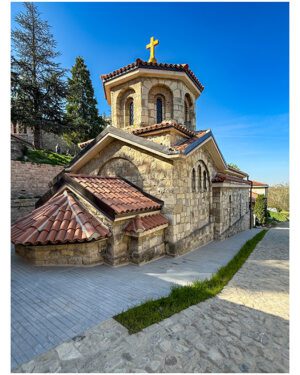
St. Petka Chapel – A small, breathtaking sanctuary located just a few steps below Ružica Church along the fortress edge. Built directly over a sacred natural water spring that locals have revered for centuries for its healing properties, stepping through its heavy wooden door reveals an interior that is entirely covered in brilliant, shimmering mosaic tile work that completely blankets the stone walls from floor to ceiling.
🇷🇸 Know Before You Go: Serbia Basics
Before you head out to explore the fortress walls and vibrant streets of Belgrade, here are the essential basics to keep your journey flawless.
- Language: Serbian. They officially use both the Cyrillic and Latin alphabets, which means street signs can occasionally look like a puzzle! However, English is widely and brilliantly spoken by almost everyone you will encounter in Belgrade’s restaurants, cafes, and shops.
- Currency: Serbian Dinar (RSD). Take Note: Serbia is not part of the EU and does not use the Euro. While credit cards are standard across Belgrade’s modern cafes, hotels, and boutiques, you will absolutely want to carry physical Dinars for traditional kafanas (taverns), small bakeries, and local transport.
- Best Time to Visit: To catch Belgrade at its absolute liveliest—when the floating river clubs (splavovi) open up and the parks inside Kalemegdan are bursting with life—aim for May to September.
- Getting Around: Belgrade is a highly walkable city, but it also features an extensive tram and bus network. If you need to use a taxi, be highly vigilant against common airport scams. Always use an official taxi voucher desk inside the terminal or download the local ride-hailing app, CarGo, to ensure you get a completely honest, fair rate.