
🇱🇹 Lithuania: Baroque Spires & Whispering Dunes
The grand transition into Northern Europe’s largest Baroque old city rewrites the entire rhythm of your journey the moment you step into Lithuania. Perched at the southern edge of the Baltics, this fiercely resilient nation operates as a striking canvas of unexpected contrasts. It is a land where a deeply rooted, mystical pagan heritage still whispers through ancient oak forests, where a breathtaking, wind-sculpted sand peninsula divides a wild lagoon from the open sea, and where centuries of tragic wartime history have been met with an unbreakable human spirit.
Our Lithuanian notebooks are written from the cobblestones of castle-crowned islands, the hidden courtyards of historic universities, and the moving paths of sacred monuments. This is a destination built for slow, deliberate discovery—where you can lose yourself inside the sprawling, terracotta-roofed labyrinth of Vilnius’s UNESCO-listed Old Town, explore the fairytale brick towers of the island castle in Trakai, or stand in awe before the staggering, raw emotion of the Hill of Crosses near Šiauliai. Lithuania invites you to look past the mainstream travel tracks, embrace its deep layers of artistic rebellion, and absorb a warm, proud culture of survival.
🇱🇹 Scrapbook Notes on Lithuania
- Population – Around 2.8 million people (with a proud, tightly-knit society that stands as the largest of the three Baltic states).
- Global Tourism Ranking – Securely holding the #81 spot in the world for international arrivals. The country welcomes roughly 2.4 million overnight international visitors annually, and it was recently highlighted as one of the top most hospitable destinations on the planet.
- Capital City – Vilnius – A breathtaking, sprawling northern metropolis home to Europe’s largest Baroque old city core [🔍]. It’s a place where winding terracotta-roofed alleys and historic church spires seamlessly blend with a wildly creative street art scene and an independent bohemian spirit.
- Most Visited Hubs – The historic, hidden courtyards of Vilnius Old Town; the dramatic, fairytale-like red brick towers of Trakai Island Castle; and the modern art plazas and modernist architecture of Kaunas.
🇱🇹 Hidden Gems You Should Seek Out
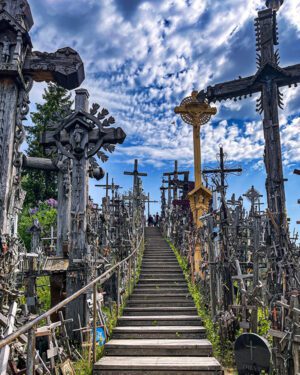
The Hill of Crosses – A deeply moving, sensory, and slightly haunting landscape hidden near Šiauliai. This sacred hill holds over one hundred thousand wooden, metal, and stone crosses left by pilgrims over centuries as an unbreakable, silent monument of national defiance, peace, and cultural survival.
The Ninth Fort – A raw, deeply powerful, and monumental historical site located on the outskirts of Kaunas. Part of a massive 19th-century defensive fortress complex, this imposing stone-and-concrete stronghold serves as an unforgettable window into modern history, punctuated by a towering, 32-metre-tall brutalist monument that slices into the sky as a dramatic testament to memory and resilience.
The Curonian Spit and the Dead Dunes – A spectacular, wind-sculpted sand peninsula that divides the wild Baltic Sea from a massive lagoon [🔍]. Walking along the quiet boardwalk trails of Parnidis Dune reveals massive, shifting walls of white sand that swallow the pine forests, offering a raw landscape that looks completely distinct from the rest of the region.
The Republic of Užupis – A whimsical, self-proclaimed independent artist republic nestled inside a river loop right in the heart of Vilnius. This bohemian neighborhood operates under its own playful flag, currency, and a beautifully written constitution posted on a mirror-lined wall that includes laws like “a dog has the right to be a dog” and “everyone has the right to be unhappy.”
🇱🇹 Know Before You Go: Lithuania Basics
Before you pack your travel journals to explore the Baroque grids and island castles, here are the essential basics to keep your journey completely seamless.
- Language: Lithuanian. It is one of the oldest surviving Indo-European languages on earth, retaining ancient linguistic structures that make it highly fascinating to track. While English is spoken with absolute ease by younger generations and hospitality teams inside Vilnius and Kaunas, having a translation app ready for rural train stations and countryside guesthouses is a smart move.
- Currency: Euro (€). Lithuania is highly digital-first. Credit cards, debit chips, and mobile tap are standard everywhere from hip Vilnius coffee shops to the entry gates at Trakai Castle. However, keep a few Euro coins handy for public parking meters or purchasing traditional amber souvenirs at local artisan stalls.
- The Food Culture: You cannot understand Lithuania without experiencing their culinary comfort food. The national dish is the Cepelinai—giant, potato-dough dumplings stuffed with meat or cheese, shaped like zeppelins, and smothered in sour cream and bacon bits. Pair it with a bowl of Šaltibarščiai (their iconic, vibrant bright pink cold beet soup) for the ultimate local feast.
- Best Time to Visit: To secure spectacular daylight hours, vibrant outdoor patio culture, and comfortable exploring weather, aim for June to August (Summer). If you want to catch the jaw-dropping autumn foliage crisping across the lake districts, September and October offer a beautifully crisp and quiet window to travel.
- Getting Around: Vilnius features a brilliant, cheap, and easy-to-use network of trolleybuses and buses. For zipping between major regional hubs (like heading from Vilnius to the modern art core of Kaunas or out to the coastal gateway of Klaipėda), Lithuania’s national rail network (LTG Link) is incredibly modern, clean, and highly efficient.